Kirjailija
William Cronon
Kirjat ja teokset yhdessä paikassa: 92 kirjaa, julkaisuja vuosilta 1992-2017, suosituimpien joukossa Car Country. Vertaile teosten hintoja ja tarkista saatavuus suomalaisista kirjakaupoista.
92 kirjaa
Kirjojen julkaisuhaarukka 1992-2017.
The human impulse to religion--the drive to explain the world, humans, and humans’ place in the universe – can be seen to encompass environmentalism as an offshoot of the secular, material faith in human reason and power that dominates modern society. Faith in Nature traces the history of environmentalism--and its moral thrust--from its roots in the Enlightenment and Romanticism through the Progressive Era to the present. Drawing astonishing parallels between religion and environmentalism, the book examines the passion of the movement’s adherents and enemies alike, its concern with the moral conduct of daily life, and its attempt to answer fundamental questions about the underlying order of the world and of humanity’s place within it.Thomas Dunlap is among the leading environmental historians and historians of science in the United States. Originally trained as a chemist, he has a rigorous understanding of science and appreciates its vital importance to environmental thought. But he is also a devout Catholic who believes that the insights of religious revelation need not necessarily be at odds with the insights of scientific investigation. This book grew from his own religious journey and his attempts to understand human ethical obligations and spiritual debts to the natural world.CHOICE Outstanding Academic Title 2005

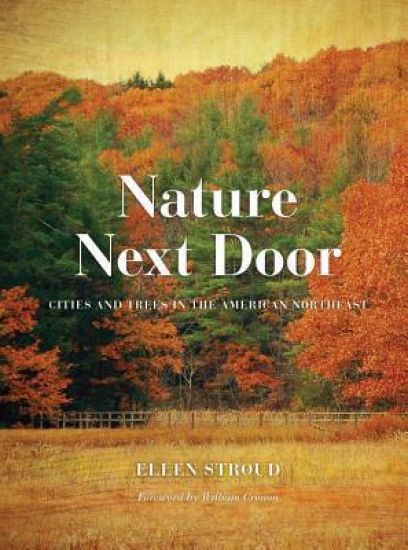
The once denuded northeastern United States is now a region of trees. Nature Next Door argues that the growth of cities, the construction of parks, the transformation of farming, the boom in tourism, and changes in the timber industry have together brought about a return of northeastern forests. Although historians and historical actors alike have seen urban and rural areas as distinct, they are in fact intertwined, and the dichotomies of farm and forest, agriculture and industry, and nature and culture break down when the focus is on the history of Northeastern woods. Cities, trees, mills, rivers, houses, and farms are all part of a single transformed regional landscape.In an examination of the cities and forests of the northeastern United States-with particular attention to the woods of Maine, New Hampshire, Pennsylvania, and Vermont-Ellen Stroud shows how urbanization processes there fostered a period of recovery for forests, with cities not merely consumers of nature but creators as well. Interactions between city and hinterland in the twentieth century Northeast created a new wildness of metropolitan nature: a reforested landscape intricately entangled with the region's cities and towns.
Landscapes of Promise
William G. Robbins; William Cronon
University of Washington Press
2015
sidottu
Landscapes of Promise is the first comprehensive environmental history of the early years of a state that has long been associated with environmental protection. Covering the period from early human habitation to the end of World War II, William Robbins shows that the reality of Oregon's environmental history involves far more than a discussion of timber cutting and land-use planning.Robbins demonstrates that ecological change is not only a creation of modern industrial society. Native Americans altered their environment in a number of ways, including the planned annual burning of grasslands and light-burning of understory forest debris. Early Euro-American settlers who thought they were taming a virgin wilderness were merely imposing a new set of alterations on an already modified landscape.Beginning with the first 18th-century traders on the Pacific Coast, alterations to Oregon's landscape were closely linked to the interests of global market forces. Robbins uses period speeches and publications to document the increasing commodification of the landscape and its products. "Environment melts before the man who is in earnest," wrote one Oregon booster in 1905, reflecting prevailing ways of thinking.In an impressive synthesis of primary sources and historical analysis, Robbins traces the transformation of the Oregon landscape and the evolution of our attitudes toward the natural world.
The Rhine River is Europe’s most important commercial waterway, channeling the flow of trade among Switzerland, France, Germany, and the Netherlands. In this innovative study, Mark Cioc focuses on the river from the moment when the Congress of Vienna established a multinational commission charged with making the river more efficient for purposes of trade and commerce in 1815. He examines the engineering and administrative decisions of the next century and a half that resulted in rapid industrial growth as well as profound environmental degradation, and highlights the partially successful restoration efforts undertaken from the 1970s to the present.The Rhine is a classic example of a “multipurpose” river -- used simultaneously for transportation, for industry and agriculture, for urban drinking and sanitation needs, for hydroelectric production, and for recreation. It thus invites comparison with similarly over-burdened rivers such as the Mississippi, Hudson, Colorado, and Columbia. The Rhine’s environmental problems are, however, even greater than those of other rivers because it is so densely populated (50 million people live along its borders), so highly industrialized (10% of global chemical production), and so short (775 miles in length).Two centuries of nonstop hydraulic tinkering have resulted in a Rhine with a sleek and slender profile. In their quest for a perfect canal-like river, engineers have modified it more than any other large river in the world. As a consequence, between 1815 and 1975, the river lost most of its natural floodplain, riverside vegetation, migratory fish, and biodiversity. Recent efforts to restore that biodiversity, though heartening, can have only limited success because so many of the structural changes to the river are irreversible.The Rhine: An Eco-Biography, 1815-2000 makes clear just how central the river has been to all aspects of European political, economic, and environmental life for the past two hundred years.
Land Use, Environment, and Social Change
Richard White; William Cronon
University of Washington Press
2015
sidottu
Whidbey and Camano, two of the largest of the numerous beautiful islands dotting Puget Sound, together form the major part of Island Country. Taking this county as a case study and following its history from Indian times to the present, Richard White explores the complex relationship between human induced environmental change and social change. This new edition of his classic study includes a new preface by the author and a foreword by William Cronon.
Winner of the George Perkins Marsh Award, American Society for Environmental History
George Perkins Marsh (1801–1882) was the first to reveal the menace of environmental misuse, to explain its causes, and to prescribe reforms. David Lowenthal here offers fresh insights, from new sources, into Marsh’s career and shows his relevance today, in a book which has its roots in but wholly supersedes Lowenthal’s earlier biography George Perkins Marsh: Versatile Vermonter (1958). Marsh’s devotion to the repair of nature, to the concerns of working people, to women’s rights, and to historical stewardship resonate more than ever. His Vermont birthplace is now a national park chronicling American conservation, and the crusade he launched is now global.Marsh’s seminal book Man and Nature is famed for its ecological acumen. The clue to its inception lies in Marsh’s many-sided engagement in the life of his time. The broadest scholar of his day, he was an acclaimed linguist, lawyer, congressman, and renowned diplomat who served 25 years as U.S. envoy to Turkey and to Italy. He helped found and guide the Smithsonian Institution, shaped the Washington Monument, penned potent tracts on fisheries and on irrigation, spearheaded public science, art, and architecture. He wrote on camels and corporate corruption, Icelandic grammar and Alpine glaciers. His pungent and provocative letters illuminate life on both sides of the Atlantic.Like Darwin’s Origin of Species, Marsh’s Man and Nature marked the inception of a truly modern way of looking at the world, of taking care lest we irreversibly degrade the fabric of humanized nature we are bound to manage. Marsh’s ominous warnings inspired reforestation, watershed management, soil conservation, and nature protection in his day and ours.George Perkins Marsh: Prophet of Conservation was awarded the Association for American Geographers' 2000 J. B. Jackson Prize. The book was also on the shortlist for the first British Academy Book Prize, awarded in December 2001.
From tenements to alleyways to latrines, twentieth-century American cities created spaces where pests flourished and people struggled for healthy living conditions. In Pests in the City, Dawn Day Biehler argues that the urban ecologies that supported pests were shaped not only by the physical features of cities but also by social inequalities, housing policies, and ideas about domestic space.Community activists and social reformers strived to control pests in cities such as Washington, DC, Chicago, Baltimore, New York, and Milwaukee, but such efforts fell short when authorities blamed families and neighborhood culture for infestations rather than attacking racial segregation or urban disinvestment. Pest-control campaigns tended to target public or private spaces, but pests and pesticides moved readily across the porous boundaries between homes and neighborhoods.This story of flies, bedbugs, cockroaches, and rats reveals that such creatures thrived on lax code enforcement and the marginalization of the poor, immigrants, and people of color. As Biehler shows, urban pests have remained a persistent problem at the intersection of public health, politics, and environmental justice, even amid promises of modernity and sustainability in American cities.Watch the trailer: http://www.youtube.com/watch?v=GG9PFxLY7K4&feature=c4-overview&list=UUge4MONgLFncQ1w1C_BnHcw
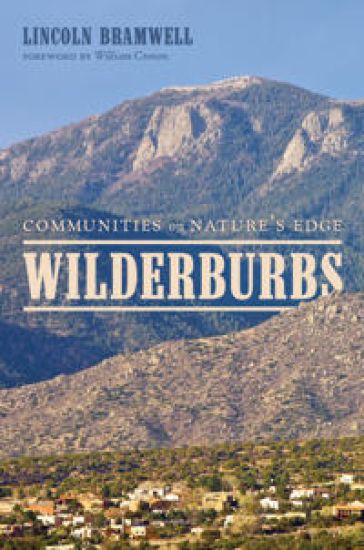
Since the 1950s, the housing developments in the West that historian Lincoln Bramwell calls "wilderburbs" have offered residents both the pleasures of living in nature and the creature comforts of the suburbs. Remote from cities but still within commuting distance, nestled next to lakes and rivers or in forests and deserts, and often featuring spectacular views of public lands, wilderburbs celebrate the natural beauty of the American West and pose a vital threat to it. Wilderburbs tells the story of how roads and houses and water development have transformed the rural landscape in the West. Bramwell introduces readers to developers, homeowners, and government regulators, all of whom have faced unexpected environmental problems in designing and building wilderburb communities, including unpredictable water supplies, threats from wildfires, and encounters with wildlife. By looking at wilderburbs in the West, especially those in Utah, Colorado, and New Mexico, Bramwell uncovers the profound environmental consequences of Americans' desire to live in the wilderness.
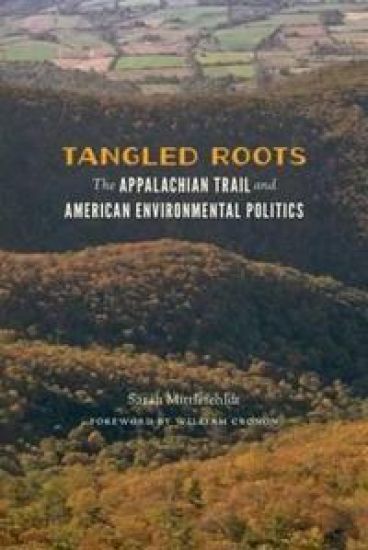
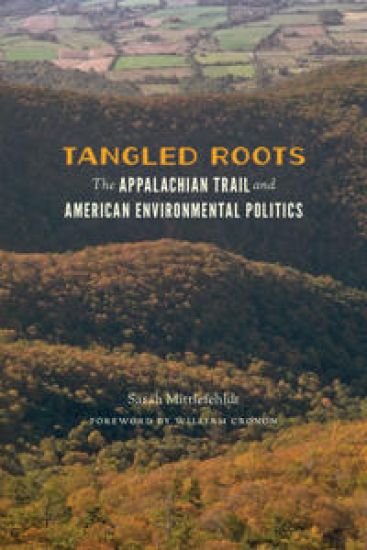
The Appalachian Trail, a thin ribbon of wilderness running through the densely populated eastern United States, offers a refuge from modern society and a place apart from human ideas and institutions. But as environmental historian—and thru-hiker—Sarah Mittlefehldt argues, the trail is also a conduit for community engagement and a model for public-private cooperation and environmental stewardship.In Tangled Roots, Mittlefehldt tells the story of the trail's creation. The project was one of the first in which the National Park Service attempted to create public wilderness space within heavily populated, privately owned lands. Originally a regional grassroots endeavor, under federal leadership the trail project retained unprecedented levels of community involvement. As citizen volunteers came together and entered into conversation with the National Parks Service, boundaries between "local" and "nonlocal," "public" and "private," "amateur" and "expert" frequently broke down. Today, as Mittlefehldt tells us, the Appalachian Trail remains an unusual hybrid of public and private efforts and an inspiring success story of environmental protection.Watch the trailer: http://www.youtube.com/watch?v=AFyhuGqbCGc
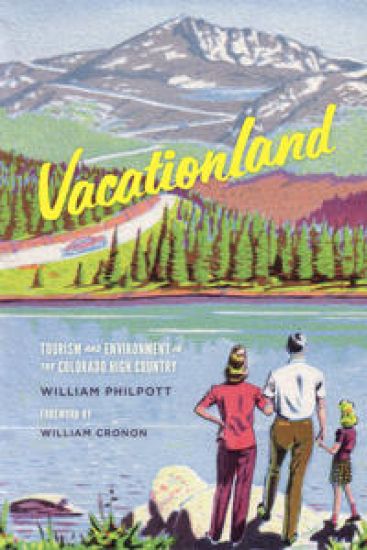
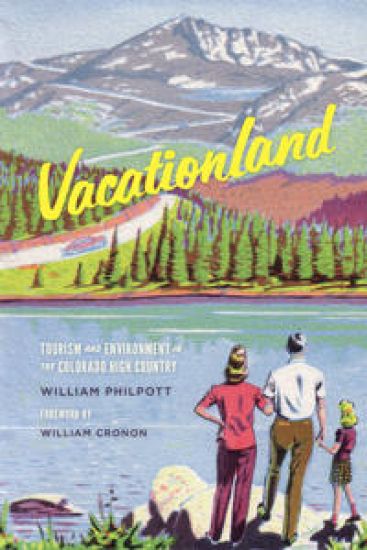
Winner of the Western Writers of America 2014 Spur Award for Best Western Nonfiction, ContemporaryMention the Colorado high country today and vacation imagery springs immediately to mind: mountain scenery, camping, hiking, skiing, and world-renowned resorts like Aspen and Vail. But not so long ago, the high country was isolated and little visited. Vacationland tells the story of the region's dramatic transformation in the decades after World War II, when a loose coalition of tourist boosters fashioned alluring images of nature in the high country and a multitude of local, state, and federal actors built the infrastructure for high-volume tourism: ski mountains, stocked trout streams, motels, resort villages, and highway improvements that culminated in an entirely new corridor through the Rockies, Interstate 70.Vacationland is more than just the tale of one tourist region. It is a case study of how the consumerism of the postwar years rearranged landscapes and revolutionized American environmental attitudes. Postwar tourists pioneered new ways of relating to nature, forging surprisingly strong personal connections to their landscapes of leisure and in many cases reinventing their lifestyles and identities to make vacationland their permanent home. They sparked not just a population boom in popular tourist destinations like Colorado but also a new kind of environmental politics, as they demanded protection for the aesthetic and recreational qualities of place that promoters had sold them. Those demands energized the American environmental movement-but also gave it blind spots that still plague it today.Peopled with colorful characters, richly evocative of the Rocky Mountain landscape, Vacationland forces us to consider how profoundly tourism changed Colorado and America and to grapple with both the potential and the problems of our familiar ways of relating to environment, nature, and place.
The Wilderness Writings of Howard Zahniser
William Cronon
University of Washington Press
2014
sidottu
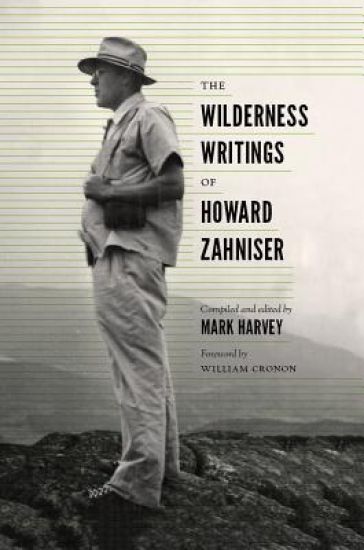
Howard Zahniser (1906–1964), executive secretary of The Wilderness Society and editor of The Living Wilderness from 1945 to 1964, is arguably the person most responsible for drafting and promoting the Wilderness Act in 1964. The act, which created the National Wilderness Preservation System, was the culmination of Zahniser's years of tenacious lobbying and his work with conservationists across the nation. In 1964, fifty-four wilderness areas in thirteen states were part of the system; today the number has grown to 757 areas, protecting more than a hundred million acres in forty-four states and Puerto Rico.Zahniser's passion for wild places and his arguments for their preservation were communicated through radio addresses, magazine articles, speeches, and congressional testimony. An eloquent and often poetic writer, he seized every opportunity to make the case for the value of wilderness to people, communities, and the nation.Despite his unquestioned importance and the power of his prose, the best of Zahniser's wilderness writings have never before been gathered in a single volume. This indispensable collection makes available in one place essays and other writings that played a vital role in persuading Congress and the American people that wilderness in the United States deserved permanent protection.
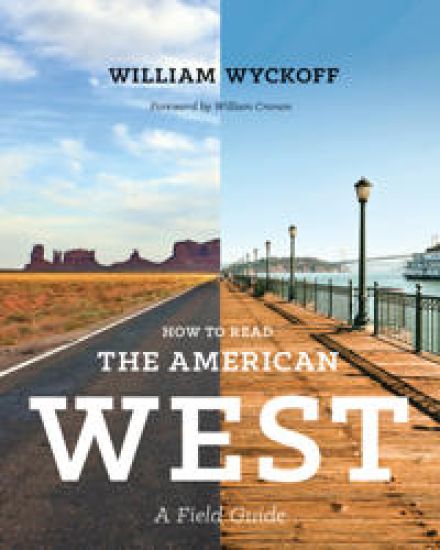
How to Read the American West
William Wyckoff; William Cronon
University of Washington Press
2014
pokkari
From deserts to ghost towns, from national forests to California bungalows, many of the features of the western American landscape are well known to residents and travelers alike. But in How to Read the American West, William Wyckoff introduces readers anew to these familiar landscapes. A geographer and an accomplished photographer, Wyckoff offers a fresh perspective on the natural and human history of the American West and encourages readers to discover that history has shaped the places where people live, work, and visit.This innovative field guide includes stories, photographs, maps, and diagrams on a hundred landscape features across the American West. Features are grouped according to type, such as natural landscapes, farms and ranches, places of special cultural identity, and cities and suburbs. Unlike the geographic organization of a traditional guidebook, Wyckoff's field guide draws attention to the connections and the differences between and among places. Emphasizing features that recur from one part of the region to another, the guide takes readers on an exploration of the eleven western states with trips into their natural and cultural character.How to Read the American West is an ideal traveling companion on the main roads and byways in the West, providing unexpected insights into the landscapes you see out your car window. It is also a wonderful source for armchair travelers and people who live in the West who want to learn more about the modern West, how it came to be, and how it may change in the years to come.Showcasing the everyday alongside the exceptional, Wyckoff demonstrates how asking new questions about the landscapes of the West can let us see our surroundings more clearly, helping us make informed and thoughtful decisions about their stewardship in the twenty-first century.Watch the trailer: http://www.youtube.com/watch?v=aYSmp5gZ4-I
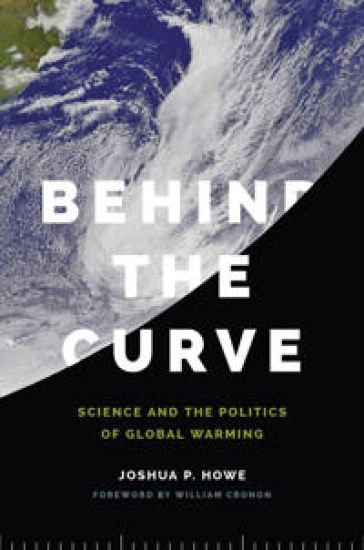
In 1958, Charles David Keeling began measuring the concentration of carbon dioxide in the earth's atmosphere at the Mauna Loa Observatory in Hawaii. His project kicked off a half century of research that has expanded our knowledge of climate change. Despite more than fifty years of research, however, our global society has yet to find real solutions to the problem of global warming. Why?In Behind the Curve, Joshua Howe attempts to answer this question. He explores the history of global warming from its roots as a scientific curiosity to its place at the center of international environmental politics. The book follows the story of rising CO2—illustrated by the now famous Keeling Curve—through a number of historical contexts, highlighting the relationships among scientists, environmentalists, and politicians as those relationships changed over time.The nature of the problem itself, Howe explains, has privileged scientists as the primary spokespeople for the global climate. But while the "science first" forms of advocacy they developed to fight global warming produced more and better science, the primacy of science in global warming politics has failed to produce meaningful results. In fact, an often exclusive focus on science has left advocates for change vulnerable to political opposition and has limited much of the discussion to debates about the science itself.As a result, while we know much more about global warming than we did fifty years ago, CO2 continues to rise. In 1958, Keeling first measured CO2 at around 315 parts per million; by 2013, global CO2 had soared to 400 ppm. The problem is not getting better - it's getting worse. Behind the Curve offers a critical and levelheaded look at how we got here.
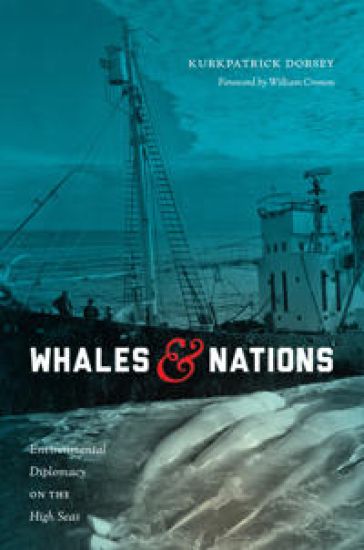
Before commercial whaling was outlawed in the 1980s, diplomats, scientists, bureaucrats, environmentalists, and sometimes even whalers themselves had attempted to create an international regulatory framework that would allow for a sustainable whaling industry. In Whales and Nations, Kurkpatrick Dorsey tells the story of the international negotiation, scientific research, and industrial development behind these efforts —and their ultimate failure.Whales and Nations begins in the early twentieth century, when new technology revived the fading whaling industry and made whale hunting possible on an unprecedented scale. By the 1920s, declining whale populations prompted efforts to develop "rational"—what today would be called sustainable—whaling practices. But even though almost everyone involved with commercial whaling knew that the industry was on an unsustainable path, Dorsey argues, powerful economic, political, and scientific forces made failure nearly inevitable.Based on a deep engagement with diplomatic history, Whales and Nations provides a unique perspective on the challenges facing international conservation projects. This history has profound implications for today's pressing questions of global environmental cooperation and sustainability.Watch the trailer: http://www.youtube.com/watch?v=3QsLlM5KTx0
The Appalachian Trail, a thin ribbon of wilderness running through the densely populated eastern United States, offers a refuge from modern society and a place apart from human ideas and institutions. But as environmental historian—and thru-hiker—Sarah Mittlefehldt argues, the trail is also a conduit for community engagement and a model for public-private cooperation and environmental stewardship.In Tangled Roots, Mittlefehldt tells the story of the trail's creation. The project was one of the first in which the National Park Service attempted to create public wilderness space within heavily populated, privately owned lands. Originally a regional grassroots endeavor, under federal leadership the trail project retained unprecedented levels of community involvement. As citizen volunteers came together and entered into conversation with the National Parks Service, boundaries between "local" and "nonlocal," "public" and "private," "amateur" and "expert" frequently broke down. Today, as Mittlefehldt tells us, the Appalachian Trail remains an unusual hybrid of public and private efforts and an inspiring success story of environmental protection.Watch the trailer: http://www.youtube.com/watch?v=AFyhuGqbCGc
Winner of the Western Writers of America 2014 Spur Award for Best Western Nonfiction, ContemporaryMention the Colorado high country today and vacation imagery springs immediately to mind: mountain scenery, camping, hiking, skiing, and world-renowned resorts like Aspen and Vail. But not so long ago, the high country was isolated and little visited. Vacationland tells the story of the region's dramatic transformation in the decades after World War II, when a loose coalition of tourist boosters fashioned alluring images of nature in the high country and a multitude of local, state, and federal actors built the infrastructure for high-volume tourism: ski mountains, stocked trout streams, motels, resort villages, and highway improvements that culminated in an entirely new corridor through the Rockies, Interstate 70.Vacationland is more than just the tale of one tourist region. It is a case study of how the consumerism of the postwar years rearranged landscapes and revolutionized American environmental attitudes. Postwar tourists pioneered new ways of relating to nature, forging surprisingly strong personal connections to their landscapes of leisure and in many cases reinventing their lifestyles and identities to make vacationland their permanent home. They sparked not just a population boom in popular tourist destinations like Colorado but also a new kind of environmental politics, as they demanded protection for the aesthetic and recreational qualities of place that promoters had sold them. Those demands energized the American environmental movement-but also gave it blind spots that still plague it today.Peopled with colorful characters, richly evocative of the Rocky Mountain landscape, Vacationland forces us to consider how profoundly tourism changed Colorado and America and to grapple with both the potential and the problems of our familiar ways of relating to environment, nature, and place.
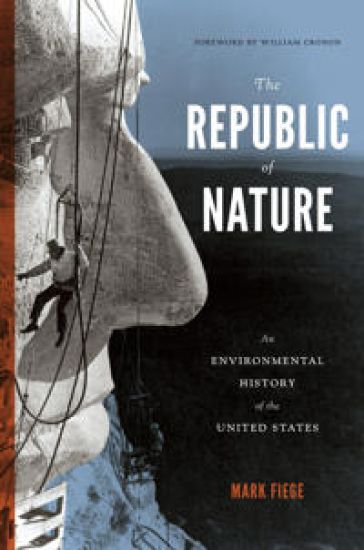
In the dramatic narratives that comprise The Republic of Nature, Mark Fiege reframes the canonical account of American history based on the simple but radical premise that nothing in the nation's past can be considered apart from the natural circumstances in which it occurred. Revisiting historical icons so familiar that schoolchildren learn to take them for granted, he makes surprising connections that enable readers to see old stories in a new light.Among the historical moments revisited here, a revolutionary nation arises from its environment and struggles to reconcile the diversity of its people with the claim that nature is the source of liberty. Abraham Lincoln, an unlettered citizen from the countryside, steers the Union through a moment of extreme peril, guided by his clear-eyed vision of nature's capacity for improvement. In Topeka, Kansas, transformations of land and life prompt a lawsuit that culminates in the momentous civil rights case of Brown v. Board of Education.By focusing on materials and processes intrinsic to all things and by highlighting the nature of the United States, Fiege recovers the forgotten and overlooked ground on which so much history has unfolded. In these pages, the nation's birth and development, pain and sorrow, ideals and enduring promise come to life as never before, making a once-familiar past seem new. The Republic of Nature points to a startlingly different version of history that calls on readers to reconnect with fundamental forces that shaped the American experience.For more information, visit the author's website: http://republicofnature.com/
The Promise of Wilderness
James Morton Turner; William Cronon
University of Washington Press
2013
pokkari
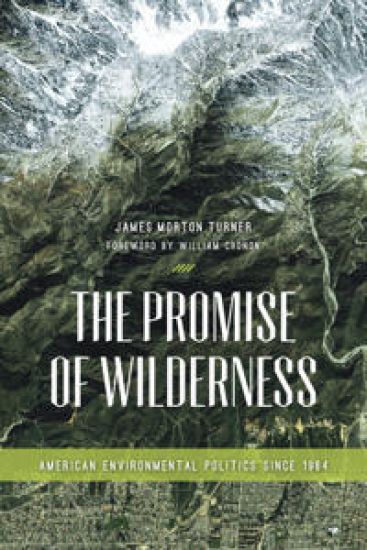
From Denali's majestic slopes to the Great Swamp of central New Jersey, protected wilderness areas make up nearly twenty percent of the parks, forests, wildlife refuges, and other public lands that cover a full fourth of the nation's territory. But wilderness is not only a place. It is also one of the most powerful and troublesome ideas in American environmental thought, representing everything from sublime beauty and patriotic inspiration to a countercultural ideal and an overextension of government authority.The Promise of Wilderness examines how the idea of wilderness has shaped the management of public lands since the passage of the Wilderness Act in 1964. Wilderness preservation has engaged diverse groups of citizens, from hunters and ranchers to wildlife enthusiasts and hikers, as political advocates who have leveraged the resources of local and national groups toward a common goal. Turner demonstrates how these efforts have contributed to major shifts in modern American environmental politics, which have emerged not just in reaction to a new generation of environmental concerns, such as environmental justice and climate change, but also in response to changed debates over old conservation issues, such as public lands management. He also shows how battles over wilderness protection have influenced American politics more broadly, fueling disputes over the proper role of government, individual rights, and the interests of rural communities; giving rise to radical environmentalism; and playing an important role in the resurgence of the conservative movement, especially in the American West.Watch the book trailer: https://www.youtube.com/watch?v=Jsq-6LAeYKk
The once denuded northeastern United States is now a region of trees. Nature Next Door argues that the growth of cities, the construction of parks, the transformation of farming, the boom in tourism, and changes in the timber industry have together brought about a return of northeastern forests. Although historians and historical actors alike have seen urban and rural areas as distinct, they are in fact intertwined, and the dichotomies of farm and forest, agriculture and industry, and nature and culture break down when the focus is on the history of Northeastern woods. Cities, trees, mills, rivers, houses, and farms are all part of a single transformed regional landscape.In an examination of the cities and forests of the northeastern United States-with particular attention to the woods of Maine, New Hampshire, Pennsylvania, and Vermont-Ellen Stroud shows how urbanization processes there fostered a period of recovery for forests, with cities not merely consumers of nature but creators as well. Interactions between city and hinterland in the twentieth century Northeast created a new wildness of metropolitan nature: a reforested landscape intricately entangled with the region's cities and towns.