Kirjailija
William Cronon
Kirjat ja teokset yhdessä paikassa: 92 kirjaa, julkaisuja vuosilta 1992-2017, suosituimpien joukossa Car Country. Vertaile teosten hintoja ja tarkista saatavuus suomalaisista kirjakaupoista.
92 kirjaa
Kirjojen julkaisuhaarukka 1992-2017.
Why do so many Americans drive for miles each autumn to buy a vegetable that they are unlikely to eat? While most people around the world eat pumpkin throughout the year, North Americans reserve it for holiday pies and other desserts that celebrate the harvest season and the rural past. They decorate their houses with pumpkins every autumn and welcome Halloween trick-or-treaters with elaborately carved jack-o'-lanterns. Towns hold annual pumpkin festivals featuring giant pumpkins and carving contests, even though few have any historic ties to the crop.In this fascinating cultural and natural history, Cindy Ott tells the story of the pumpkin. Beginning with the myth of the first Thanksgiving, she shows how Americans have used the pumpkin to fulfull their desire to maintain connections to nature and to the family farm of lore, and, ironically, how small farms and rural communities have been revitalized in the process. And while the pumpkin has inspired American myths and traditions, the pumpkin itself has changed because of the ways people have perceived, valued, and used it. Pumpkin is a smart and lively study of the deep meanings hidden in common things and their power to make profound changes in the world around us.
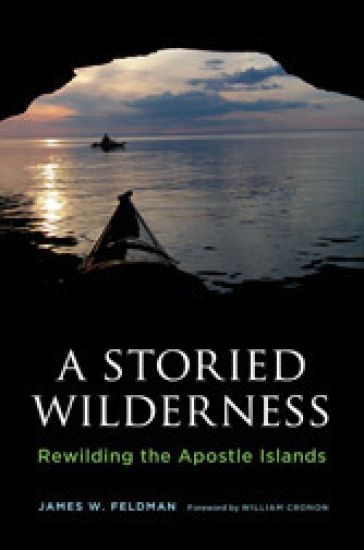
The Apostle Islands are a solitary place of natural beauty, with red sandstone cliffs, secluded beaches, and a rich and unique forest surrounded by the cold, blue waters of Lake Superior. But this seemingly pristine wilderness has been shaped and reshaped by humans. The people who lived and worked in the Apostles built homes, cleared fields, and cut timber in the island forests. The consequences of human choices made more than a century ago can still be read in today's wild landscapes.A Storied Wilderness traces the complex history of human interaction with the Apostle Islands. In the 1930s, resource extraction made it seem like the islands' natural beauty had been lost forever. But as the island forests regenerated, the ways that people used and valued the islands changed - human and natural processes together led to the rewilding of the Apostles. In 1970, the Apostles were included in the national park system and ultimately designated as the Gaylord Nelson Wilderness.How should we understand and value wild places with human pasts? James Feldman argues convincingly that such places provide the opportunity to rethink the human place in nature. The Apostle Islands are an ideal setting for telling the national story of how we came to equate human activity with the loss of wilderness characteristics, when in reality all of our cherished wild places are the products of the complicated interactions between human and natural history.Watch the book trailer: https://www.youtube.com/watch?v=frECwkA6oHs
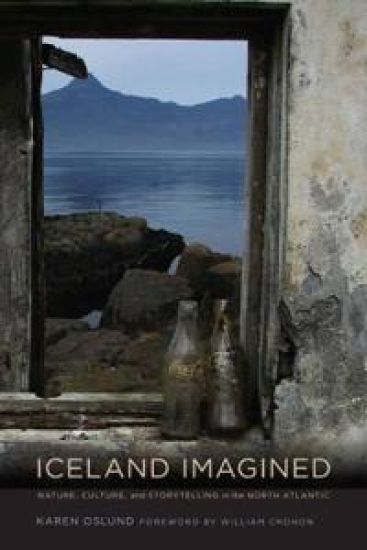
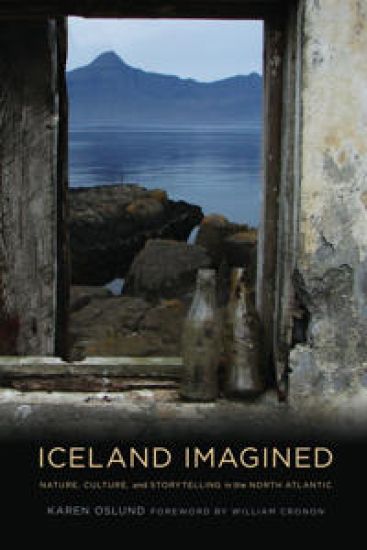
Iceland, Greenland, Northern Norway, and the Faroe Islands lie on the edges of Western Europe, in an area long portrayed by travelers as remote and exotic - its nature harsh, its people reclusive. Since the middle of the eighteenth century, however, this marginalized region has gradually become part of modern Europe, a transformation that is narrated in Karen Oslund's Iceland Imagined.This cultural and environmental history sweeps across the dramatic North Atlantic landscape, exploring its unusual geography, saga narratives, language, culture, and politics, and analyzing its emergence as a distinctive and symbolic part of Europe. The earliest visions of a wild frontier, filled with dangerous and unpredictable inhabitants, eventually gave way to images of beautiful, well-managed lands, inhabited by simple but virtuous people living close to nature.This transformation was accomplished by state-sponsored natural histories of Iceland which explained that the monsters described in medieval and Renaissance travel accounts did not really exist, and by artists who painted the Icelandic landscapes to reflect their fertile and regulated qualities. Literary scholars and linguists who came to Iceland and Greenland in the nineteenth century related the stories and the languages of the "wild North" to those of their home countries.
Why do so many Americans drive for miles each autumn to buy a vegetable that they are unlikely to eat? While most people around the world eat pumpkin throughout the year, North Americans reserve it for holiday pies and other desserts that celebrate the harvest season and the rural past. They decorate their houses with pumpkins every autumn and welcome Halloween trick-or-treaters with elaborately carved jack-o'-lanterns. Towns hold annual pumpkin festivals featuring giant pumpkins and carving contests, even though few have any historic ties to the crop.In this fascinating cultural and natural history, Cindy Ott tells the story of the pumpkin. Beginning with the myth of the first Thanksgiving, she shows how Americans have used the pumpkin to fulfull their desire to maintain connections to nature and to the family farm of lore, and, ironically, how small farms and rural communities have been revitalized in the process. And while the pumpkin has inspired American myths and traditions, the pumpkin itself has changed because of the ways people have perceived, valued, and used it. Pumpkin is a smart and lively study of the deep meanings hidden in common things and their power to make profound changes in the world around us.
Each fall and spring, millions of birds travel the Pacific Flyway, the westernmost of the four major North American bird migration routes. The landscapes they cross vary from wetlands to farmland to concrete, inhabited not only by wildlife but also by farmers, suburban families, and major cities. In the twentieth century, farmers used the wetlands to irrigate their crops, transforming the landscape and putting migratory birds at risk. The U.S. Fish and Wildlife Service responded by establishing a series of refuges that stretched from northern Washington to southern California.What emerged from these efforts was a hybrid environment, where the distinctions between irrigated farms and wildlife refuges blurred. Management of the refuges was fraught with conflicting priorities and practices. Farmers and refuge managers harassed birds with shotguns and flares to keep them off private lands, and government pilots took to the air, dropping hand grenades among flocks of geese and herding the startled birds into nearby refuges. Such actions masked the growing connections between refuges and the land around them.Seeking Refuge examines the development and management of refuges in the wintering range of migratory birds along the Pacific Flyway. Although this is a history of efforts to conserve migratory birds, the story Robert Wilson tells has considerable salience today. Many of the key places migratory birds use — the Klamath Basin, California's Central Valley, the Salton Sea — are sites of recent contentious debates over water use. Migratory birds connect and depend on these landscapes, and farmers face pressure as water is reallocated from irrigation to other purposes. In a time when global warming promises to compound the stresses on water and migratory species, Seeking Refuge demonstrates the need to foster landscapes where both wildlife and people can thrive.
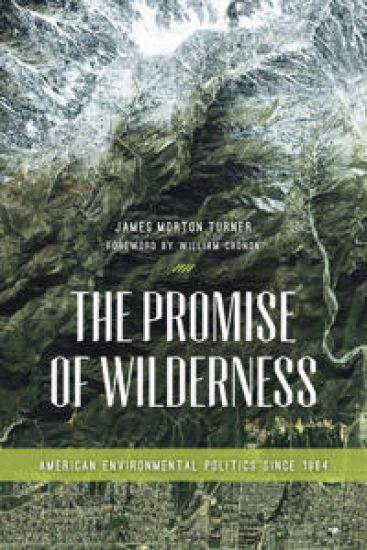
The Promise of Wilderness
James Morton Turner; William Cronon
University of Washington Press
2012
sidottu
From Denali's majestic slopes to the Great Swamp of central New Jersey, protected wilderness areas make up nearly twenty percent of the parks, forests, wildlife refuges, and other public lands that cover a full fourth of the nation's territory. But wilderness is not only a place. It is also one of the most powerful and troublesome ideas in American environmental thought, representing everything from sublime beauty and patriotic inspiration to a countercultural ideal and an overextension of government authority.The Promise of Wilderness examines how the idea of wilderness has shaped the management of public lands since the passage of the Wilderness Act in 1964. Wilderness preservation has engaged diverse groups of citizens, from hunters and ranchers to wildlife enthusiasts and hikers, as political advocates who have leveraged the resources of local and national groups toward a common goal. Turner demonstrates how these efforts have contributed to major shifts in modern American environmental politics, which have emerged not just in reaction to a new generation of environmental concerns, such as environmental justice and climate change, but also in response to changed debates over old conservation issues, such as public lands management. He also shows how battles over wilderness protection have influenced American politics more broadly, fueling disputes over the proper role of government, individual rights, and the interests of rural communities; giving rise to radical environmentalism; and playing an important role in the resurgence of the conservative movement, especially in the American West.Watch the book trailer: https://www.youtube.com/watch?v=Jsq-6LAeYKk
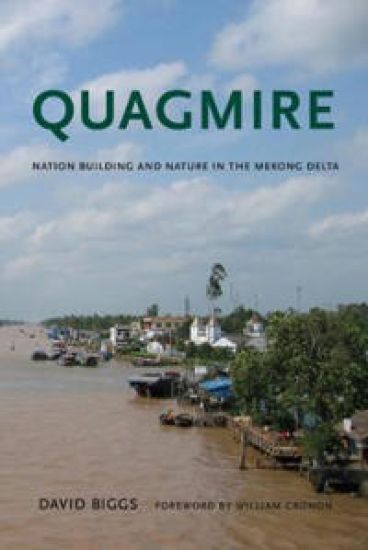
Winner of the 2012 George Perkins Marsh Prize for Best Book in Environmental HistoryIn the twentieth century, the Mekong Delta has emerged as one of Vietnam's most important economic regions. Its swamps, marshes, creeks, and canals have played a major role in Vietnam's turbulent past, from the struggles of colonialism to the Cold War and the present day. Quagmire considers these struggles, their antecedents, and their legacies through the lens of environmental history.Beginning with the French conquest in the 1860s, colonial reclamation schemes and pacification efforts centered on the development of a dense network of new canals to open land for agriculture. These projects helped precipitate economic and environmental crises in the 1930s, and subsequent struggles after 1945 led to the balkanization of the delta into a patchwork of regions controlled by the Viet Minh, paramilitary religious sects, and the struggling Franco-Vietnamese government. After 1954, new settlements were built with American funds and equipment in a crash program intended to solve continuing economic and environmental problems. Finally, the American military collapse in Vietnam is revealed as not simply a failure of policy makers but also a failure to understand the historical, political, and environmental complexity of the spaces American troops attempted to occupy and control.By exploring the delta as a quagmire in both natural and political terms, Biggs shows how engineered transformations of the Mekong Delta landscape - channelized rivers, a complex canal system, hydropower development, deforestation - have interacted with equally complex transformations in the geopolitics of the region. Quagmire delves beyond common stereotypes to present an intricate, rich history that shows how closely political and ecological issues are intertwined in the human interactions with the water environment in the Mekong Delta.Watch the book trailer: https://www.youtube.com/watch?v=gp1-UItZqsk
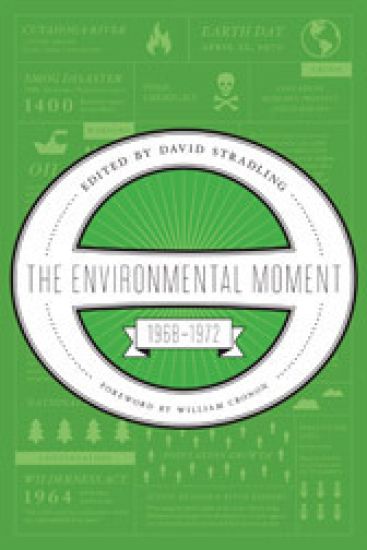
The Environmental Moment is a collection of documents that reveal the significance of the years 1968-1972 to the environmental movement in the United States. With material ranging from short pieces from the Whole Earth Catalog and articles from the Village Voice to lectures, posters, and government documents, the collection describes the period through the perspective of a diversity of participants, including activists, politicians, scientists, and average citizens. Included are the words of Rachel Carson, but also the National Review, Howard Zahniser on wilderness, Nathan Hare on the Black underclass. The chronological arrangement reveals the coincidence of a multitude of issues that rushed into public consciousness during a critical time in American history.
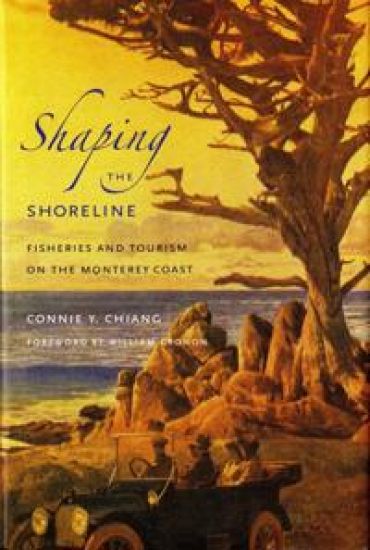
The Monterey coast, home to an acclaimed aquarium and the setting for John Steinbeck's classic novel Cannery Row, was also the stage for a historical junction of industry and tourism. Shaping the Shoreline looks at the ways in which Monterey has formed, and been formed by, the tension between labor and leisure.Connie Y. Chiang examines Monterey's development from a seaside resort into a working-class fishing town and, finally, into a tourist attraction again. Through the subjects of work, recreation, and environment -- the intersections of which are applicable to communities across the United States and abroad -- she documents the struggles and contests over this magnificent coastal region. By tracing Monterey's shift from what was once the literal Cannery Row to an iconic hub that now houses an aquarium in which nature is replicated to attract tourists, the interactions of people with nature continues to change.Drawing on histories of immigration, unionization, and the impact of national and international events, Chiang explores the reciprocal relationship between social and environmental change. By integrating topics such as race, ethnicity, and class into environmental history, Chiang illustrates the idea that work and play are not mutually exclusive endeavors.
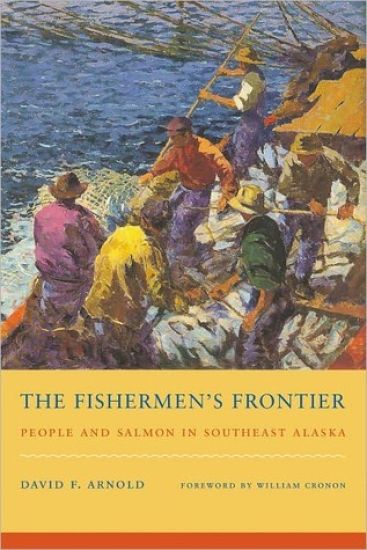
The Fishermen's Frontier
David F. Arnold; William Cronon
University of Washington Press
2011
pokkari
In The Fishermen's Frontier, David Arnold examines the economic, social, cultural, and political context in which salmon have been harvested in southeast Alaska over the past 250 years. He starts with the aboriginal fishery, in which Native fishers lived in close connection with salmon ecosystems and developed rituals and lifeways that reflected their intimacy.The transformation of the salmon fishery in southeastern Alaska from an aboriginal resource to an industrial commodity has been fraught with historical ironies. Tribal peoples -- usually considered egalitarian and communal in nature -- managed their fisheries with a strict notion of property rights, while Euro-Americans -- so vested in the notion of property and ownership -- established a common-property fishery when they arrived in the late nineteenth century. In the twentieth century, federal conservation officials tried to rationalize the fishery by "improving" upon nature and promoting economic efficiency, but their uncritical embrace of scientific planning and their disregard for local knowledge degraded salmon habitat and encouraged a backlash from small-boat fishermen, who clung to their "irrational" ways. Meanwhile, Indian and white commercial fishermen engaged in identical labors, but established vastly different work cultures and identities based on competing notions of work and nature.Arnold concludes with a sobering analysis of the threats to present-day fishing cultures by forces beyond their control. However, the salmon fishery in southeastern Alaska is still very much alive, entangling salmon, fishermen, industrialists, scientists, and consumers in a living web of biological and human activity that has continued for thousands of years.
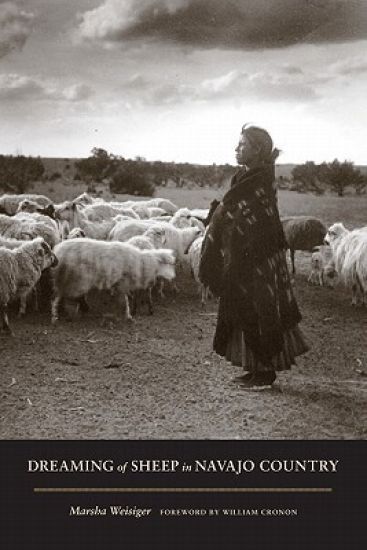
Dreaming of Sheep in Navajo Country
Marsha Weisiger; William Cronon
University of Washington Press
2011
pokkari
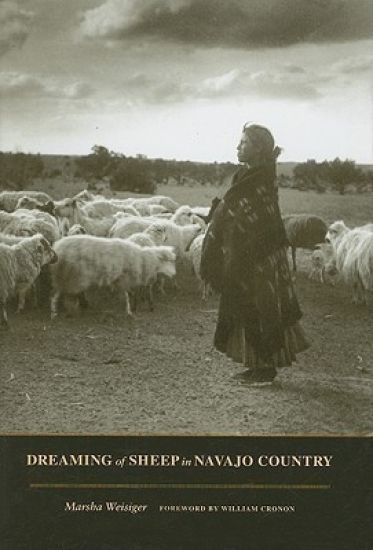
2011 Winner of the Hal K. Rothman Award for the Best Book on Western Environmental History2010 Winner of the Norris and Carol Hundley Prize and the Caroline Bancroft Honor Prize2009 Winner of the Gaspar Perez de Villagra Award sponsored by the Historical Society of New MexicoDreaming of Sheep in Navajo Country offers a fresh interpretation of the history of Navajo (Diné) pastoralism. The dramatic reduction of livestock on the Navajo Reservation in the 1930s -- when hundreds of thousands of sheep, goats, and horses were killed -- was an ambitious attempt by the federal government to eliminate overgrazing on an arid landscape and to better the lives of the people who lived there. Instead, the policy was a disaster, resulting in the loss of livelihood for Navajos -- especially women, the primary owners and tenders of the animals -- without significant improvement of the grazing lands.Livestock on the reservation increased exponentially after the late 1860s as more and more people and animals, hemmed in on all sides by Anglo and Hispanic ranchers, tried to feed themselves on an increasingly barren landscape. At the beginning of the twentieth century, grazing lands were showing signs of distress. As soil conditions worsened, weeds unpalatable for livestock pushed out nutritious native grasses, until by the 1930s federal officials believed conditions had reached a critical point. Well-intentioned New Dealers made serious errors in anticipating the human and environmental consequences of removing or killing tens of thousands of animals.Environmental historian Marsha Weisiger examines the factors that led to the poor condition of the range and explains how the Bureau of Indian Affairs, the Navajos, and climate change contributed to it. Using archival sources and oral accounts, she describes the importance of land and stock animals in Navajo culture. By positioning women at the center of the story, she demonstrates the place they hold as significant actors in Native American and environmental history.Dreaming of Sheep in Navajo Country is a compelling and important story that looks at the people and conditions that contributed to a botched policy whose legacy is still felt by the Navajos and their lands today.
Iceland, Greenland, Northern Norway, and the Faroe Islands lie on the edges of Western Europe, in an area long portrayed by travelers as remote and exotic - its nature harsh, its people reclusive. Since the middle of the eighteenth century, however, this marginalized region has gradually become part of modern Europe, a transformation that is narrated in Karen Oslund's Iceland Imagined.This cultural and environmental history sweeps across the dramatic North Atlantic landscape, exploring its unusual geography, saga narratives, language, culture, and politics, and analyzing its emergence as a distinctive and symbolic part of Europe. The earliest visions of a wild frontier, filled with dangerous and unpredictable inhabitants, eventually gave way to images of beautiful, well-managed lands, inhabited by simple but virtuous people living close to nature.This transformation was accomplished by state-sponsored natural histories of Iceland which explained that the monsters described in medieval and Renaissance travel accounts did not really exist, and by artists who painted the Icelandic landscapes to reflect their fertile and regulated qualities. Literary scholars and linguists who came to Iceland and Greenland in the nineteenth century related the stories and the languages of the "wild North" to those of their home countries.
Each fall and spring, millions of birds travel the Pacific Flyway, the westernmost of the four major North American bird migration routes. The landscapes they cross vary from wetlands to farmland to concrete, inhabited not only by wildlife but also by farmers, suburban families, and major cities. In the twentieth century, farmers used the wetlands to irrigate their crops, transforming the landscape and putting migratory birds at risk. The U.S. Fish and Wildlife Service responded by establishing a series of refuges that stretched from northern Washington to southern California.What emerged from these efforts was a hybrid environment, where the distinctions between irrigated farms and wildlife refuges blurred. Management of the refuges was fraught with conflicting priorities and practices. Farmers and refuge managers harassed birds with shotguns and flares to keep them off private lands, and government pilots took to the air, dropping hand grenades among flocks of geese and herding the startled birds into nearby refuges. Such actions masked the growing connections between refuges and the land around them.Seeking Refuge examines the development and management of refuges in the wintering range of migratory birds along the Pacific Flyway. Although this is a history of efforts to conserve migratory birds, the story Robert Wilson tells has considerable salience today. Many of the key places migratory birds use — the Klamath Basin, California’s Central Valley, the Salton Sea — are sites of recent contentious debates over water use. Migratory birds connect and depend on these landscapes, and farmers face pressure as water is reallocated from irrigation to other purposes. In a time when global warming promises to compound the stresses on water and migratory species, Seeking Refuge demonstrates the need to foster landscapes where both wildlife and people can thrive.
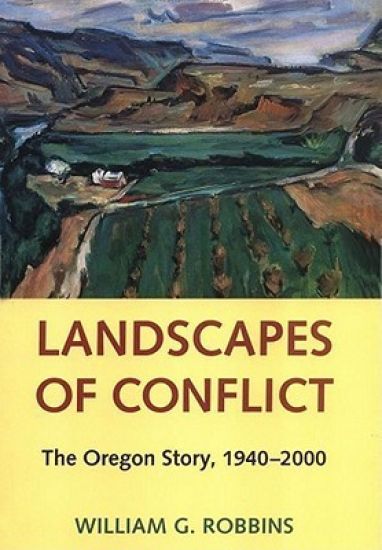
Landscapes of Conflict
William G. Robbins; William Cronon
University of Washington Press
2010
pokkari
Post-World War II Oregon was a place of optimism and growth, a spectacular natural region from ocean to high desert that seemingly provided opportunity in abundance. With the passing of time, however, Oregon's citizens — rural and urban — would find themselves entangled in issues that they had little experience in resolving. The same trees that provided income to timber corporations, small mill owners, loggers, and many small towns in Oregon, also provided a dramatic landscape and a home to creatures at risk. The rivers whose harnessing created power for industries that helped sustain Oregon's growth — and were dumping grounds for municipal and industrial wastes — also provided passageways to spawning grounds for fish, domestic water sources, and recreational space for everyday Oregonians.The story of Oregon's accommodation to these divergent interests is a divisive story between those interested in economic growth and perceived stability and citizens concerned with exercising good stewardship towards the state's natural resources and preserving the state's livability. In his second volume of Oregon's environmental history, William Robbins addresses efforts by individuals and groups within and outside the state to resolve these conflicts. Among the people who have had roles in this process, journalists and politicians Richard Neuberger and Tom McCall left substantial legacies and demonstrated the ambiguities inherent in the issues they confronted.
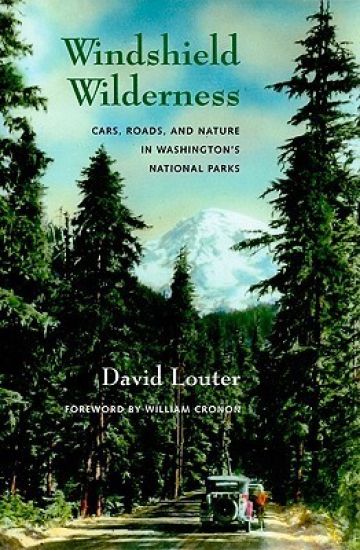
In his engaging book Windshield Wilderness, David Louter explores the relationship between automobiles and national parks, and how together they have shaped our ideas of wilderness. National parks, he argues, did not develop as places set aside from the modern world, but rather came to be known and appreciated through technological progress in the form of cars and roads, leaving an enduring legacy of knowing nature through machines.With a lively style and striking illustrations, Louter traces the history of Washington State's national parks -- Mount Rainier, Olympic, and North Cascades -- to illustrate shifting ideas of wilderness as scenic, as roadless, and as ecological reserve. He reminds us that we cannot understand national parks without recognizing that cars have been central to how people experience and interpret their meaning, and especially how they perceive them as wild places.Windshield Wilderness explores what few histories of national parks address: what it means to view parks from the road and through a windshield. Building upon recent interpretations of wilderness as a cultural construct rather than as a pure state of nature, the story of autos in parks presents the preservation of wilderness as a dynamic and nuanced process.Windshield Wilderness illuminates the difficulty of separating human-modified landscapes from natural ones, encouraging us to recognize our connections with nature in national parks.
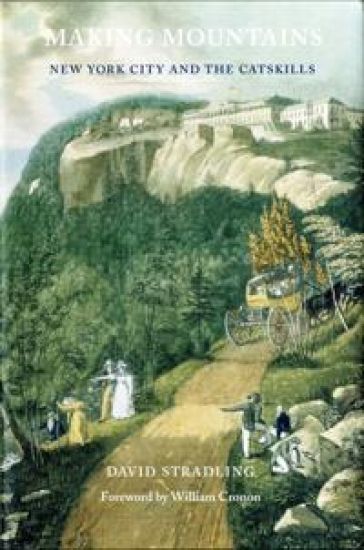
For over two hundred years, the Catskill Mountains have been repeatedly and dramatically transformed by New York City. In Making Mountains, David Stradling shows the transformation of the Catskills landscape as a collaborative process, one in which local and urban hands, capital, and ideas have come together to reshape the mountains and the communities therein. This collaboration has had environmental, economic, and cultural consequences.Early on, the Catskills were an important source of natural resources. Later, when New York City needed to expand its water supply, engineers helped direct the city toward the Catskills, claiming that the mountains offered the purest and most cost-effective waters. By the 1960s, New York had created the great reservoir and aqueduct system in the mountains that now supplies the city with 90 percent of its water.The Catskills also served as a critical space in which the nation's ideas about nature evolved. Stradling describes the great influence writers and artists had upon urban residents - especially the painters of the Hudson River School, whose ideal landscapes created expectations about how rural America should appear. By the mid-1800s, urban residents had turned the Catskills into an important vacation ground, and by the late 1800s, the Catskills had become one of the premiere resort regions in the nation.In the mid-twentieth century, the older Catskill resort region was in steep decline, but the Jewish "Borscht Belt" in the southern Catskills was thriving. The automobile revitalized mountain tourism and residence, and increased the threat of suburbanization of the historic landscape. Throughout each of these significant incarnations, urban and rural residents worked in a rough collaboration, though not without conflict, to reshape the mountains and American ideas about rural landscapes and nature.
In Plowed Under, Andrew P. Duffin traces the transformation of the Palouse region of Washington and Idaho from land thought unusable and unproductive to a wealth-generating agricultural paradise, weighing the consequences of what this progress has wrought. During the twentieth century, the Palouse became synonymous with wheat, and the landscape was irrevocably altered. At the dawn of the twenty-first century, native vegetation is almost nonexistent, stream water is so dirty that it is often unfit for even livestock, and 94 percent of all land has been converted to agriculture.Commercial agriculture also created a less noticeable ecological change: soil erosion. While common to industrial agriculture nationwide, topsoil loss evoked different political and social reactions in the Palouse. Farmers all over the nation take pride in their freedom and independence, but in the Palouse, Duffin shows, this mentality - a remnant of an older agrarian past - has been taken to the extreme and is partly responsible for erosion problems that are among the worst in the nation.In the hope of charting a better, more sustainable future, Duffin argues for a candid look at the land, its people, their decisions, and the repercussions of those decisions. As he notes, the debate is not over whether to use the land, but over what that use will look like and its social and ecological results.
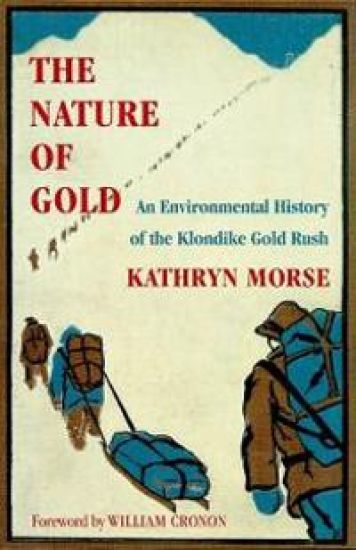
In 1896, a small group of prospectors discovered a stunningly rich pocket of gold at the confluence of the Klondike and Yukon rivers, and in the following two years thousands of individuals traveled to the area, hoping to find wealth in a rugged and challenging setting. Ever since that time, the Klondike Gold Rush - especially as portrayed in photographs of long lines of gold seekers marching up Chilkoot Pass - has had a hold on the popular imagination.In this first environmental history of the gold rush, Kathryn Morse describes how the miners got to the Klondike, the mining technologies they employed, and the complex networks by which they obtained food, clothing, and tools. She looks at the political and economic debates surrounding the valuation of gold and the emerging industrial economy that exploited its extraction in Alaska, and explores the ways in which a web of connections among America's transportation, supply, and marketing industries linked miners to other industrial and agricultural laborers across the country. The profound economic and cultural transformations that supported the Alaska-Yukon gold rush ultimately reverberate to modern times.The story Morse tells is often narrated through the diaries and letters of the miners themselves. The daunting challenges of traveling, working, and surviving in the raw wilderness are illustrated not only by the miners' compelling accounts but by newspaper reports and advertisements. Seattle played a key role as "gateway to the Klondike." A public relations campaign lured potential miners to the West and local businesses seized the opportunity to make large profits while thousands of gold seekers streamed through Seattle.The drama of the miners' journeys north, their trials along the gold creeks, and their encounters with an extreme climate will appeal not only to scholars of the western environment and of late-19th-century industrialism, but to readers interested in reliving the vivid adventure of the West's last great gold rush.
The Dawn of Conservation Diplomacy
Kurkpatrick Dorsey; William Cronon
University of Washington Press
2010
pokkari
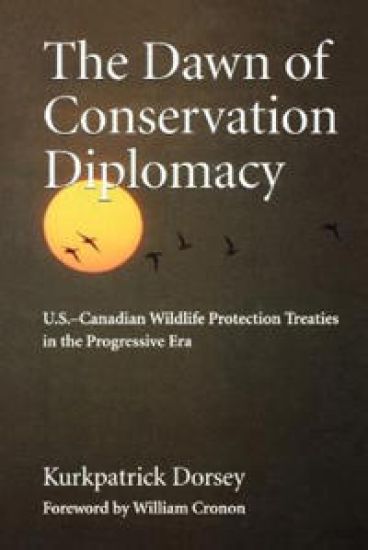
In the first decades of the twentieth century, fish in the Great Lakes and Puget Sound, seals in the North Pacific, and birds across North America faced a common threat: over harvesting that threatened extinction for many species. Progressive era conservationists saw a need for government intervention to protect threatened animals. And because so many species migrated across international political boundaries, their protectors saw the necessity of international conservation agreements. In The Dawn of Conservation Diplomacy, Kurkpatrick Dorsey examines the first three comprehensive wildlife conservation treaties in history, all between the United States and Canada: the Inland Fisheries Treaty of 1908, the North Pacific Fur Seal Convention of 1911, and the Migratory Bird Treaty of 1916.In his highly readable text, Dorsey argues that successful conservation treaties came only after conservationists learned to marshal scientific evidence, public sentiment, and economic incentives in their campaigns for protective legislation. The first treaty, intended to rescue the overfished boundary waters, failed to gain the necessary support and never became law. Despite scientific evidence of the need for conservation, politicians, and the general public were unable to counter the vocal opposition of fishermen across the continent. A few years later, conservationists successfully rallied popular sympathy for fur seals threatened with slaughter and the North Pacific Fur Seal Convention was adopted. By the time of the Migratory Bird Treaty of 1916, the importance of aesthetic appeal was clear: North American citizens were joining chapters of the Audubon Society in efforts to protect beautiful songbirds. Conservationists also presented economic evidence to support their efforts as they argued that threatened bird species provided invaluable service to farmers.Dorsey recounts the story of each of these early treaties, examining the scientific research that provided the basis for each effort, acknowledging the complexity of the issues, and presenting the personalities behind the politics. He argues that these decades-old treaties both directly affect us today and offer lessons for future conservation efforts.
Dreaming of Sheep in Navajo Country
Marsha Weisiger; William Cronon
University of Washington Press
2009
sidottu
2011 Winner of the Hal K. Rothman Award for the Best Book on Western Environmental History 2010 Winner of the Norris and Carol Hundley Prize and the Caroline Bancroft Honor Prize 2009 Winner of the Gaspar Perez de Villagra Award sponsored by the Historical Society of New MexicoDreaming of Sheep in Navajo Country offers a fresh interpretation of the history of Navajo (Diné) pastoralism. The dramatic reduction of livestock on the Navajo Reservation in the 1930s -- when hundreds of thousands of sheep, goats, and horses were killed -- was an ambitious attempt by the federal government to eliminate overgrazing on an arid landscape and to better the lives of the people who lived there. Instead, the policy was a disaster, resulting in the loss of livelihood for Navajos -- especially women, the primary owners and tenders of the animals -- without significant improvement of the grazing lands.Livestock on the reservation increased exponentially after the late 1860s as more and more people and animals, hemmed in on all sides by Anglo and Hispanic ranchers, tried to feed themselves on an increasingly barren landscape. At the beginning of the twentieth century, grazing lands were showing signs of distress. As soil conditions worsened, weeds unpalatable for livestock pushed out nutritious native grasses, until by the 1930s federal officials believed conditions had reached a critical point. Well-intentioned New Dealers made serious errors in anticipating the human and environmental consequences of removing or killing tens of thousands of animals.Environmental historian Marsha Weisiger examines the factors that led to the poor condition of the range and explains how the Bureau of Indian Affairs, the Navajos, and climate change contributed to it. Using archival sources and oral accounts, she describes the importance of land and stock animals in Navajo culture. By positioning women at the center of the story, she demonstrates the place they hold as significant actors in Native American and environmental history.Dreaming of Sheep in Navajo Country is a compelling and important story that looks at the people and conditions that contributed to a botched policy whose legacy is still felt by the Navajos and their lands today.