Kirjailija
Antonio Negri
Kirjat ja teokset yhdessä paikassa: 68 kirjaa, julkaisuja vuosilta 1992-2026, suosituimpien joukossa Spinoza for Our Time. Vertaile teosten hintoja ja tarkista saatavuus suomalaisista kirjakaupoista.
68 kirjaa
Kirjojen julkaisuhaarukka 1992-2026.
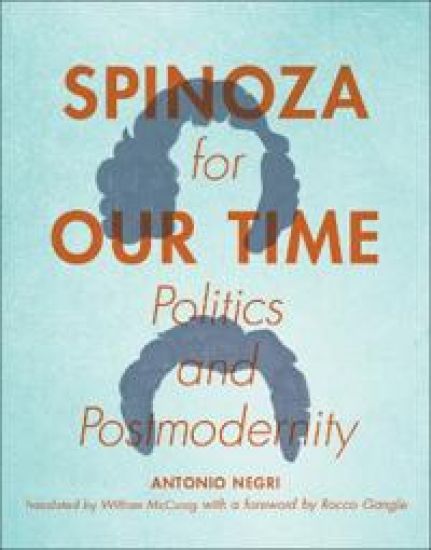
Antonio Negri, one of the world's leading scholars on Baruch Spinoza (1632–1677) and his contemporary legacy, offers a straightforward explanation of the philosopher's elaborate arguments and a persuasive case for his ongoing relevance. Responding to a resurgent interest in Spinoza's thought and its potential application to contemporary global issues, Negri demonstrates the thinker's special value to politics, philosophy, and related disciplines. Negri's work is both a return to and an advancement of his initial affirmation of Spinozian thought in The Savage Anomaly. He further defends his understanding of the philosopher as a proto-postmodernist, or a thinker who is just now, with the advent of the postmodern, becoming contemporary. Negri also connects Spinoza's theories to recent trends in political philosophy, particularly the reengagement with Carl Schmitt's "political theology," and the history of philosophy, including the argument that Spinoza belongs to a "radical enlightenment." By positioning Spinoza as a contemporary revolutionary intellectual, Negri addresses and effectively challenges twentieth-century critiques of the thinker waged by Jacques Derrida, Alain Badiou, and Giorgio Agamben.
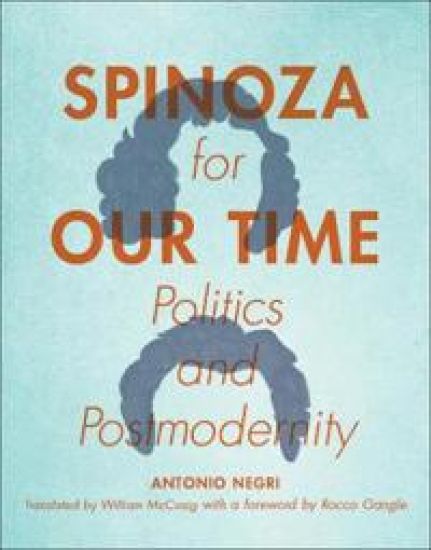
Antonio Negri, one of the world's leading scholars on Baruch Spinoza (1632-1677) and his contemporary legacy, offers a straightforward explanation of the philosopher's elaborate arguments and a persuasive case for his ongoing relevance. Responding to a resurgent interest in Spinoza's thought and its potential application to contemporary global issues, Negri demonstrates the thinker's special value to politics, philosophy, and related disciplines. Negri's work is both a return to and an advancement of his initial affirmation of Spinozian thought in The Savage Anomaly. He further defends his understanding of the philosopher as a proto-postmodernist, or a thinker who is just now, with the advent of the postmodern, becoming contemporary. Negri also connects Spinoza's theories to recent trends in political philosophy, particularly the reengagement with Carl Schmitt's "political theology," and the history of philosophy, including the argument that Spinoza belongs to a "radical enlightenment." By positioning Spinoza as a contemporary revolutionary intellectual, Negri addresses and effectively defeats twentieth-century critiques of the thinker waged by Jacques Derrida, Alain Badiou, and Giorgio Agamben.

The philosopher Antonio Negri was one of the preeminent thinkers of our time: his writings on class, socialism, and empire have had an enormous influence on contemporary political theory. His political activism and outspoken advocacy for the downtrodden also placed him at the centre of some of the most dramatic developments in recent Italian history. Story of a Communist—the first volume of Negri’s three-part autobiography—gives a riveting account of his intellectual development and of the price he paid for living out his ideals.Negri paints a vivid portrait of the ferment in which some of his most important arguments and ideas took shape, and he provides crucial context for an understanding of the operaismo movement and of the influence that it continues to exert. Story of a Communist is also a very personal work, however: it is a compelling and often moving narrative of a childhood overshadowed by fascism, and of the ways in which Negri’s later political interventions were shaped by his profoundly important relationships with comrades and collaborators. This first volume traces the author’s involvement with left-wing politics in the post-war period, recounting in fascinating detail his efforts to marry together his early intellectual work with his commitment to militant labour activism. It also provides an indispensable ground-level perspective on the increasingly repressive measures taken by the Italian government in response to the social movements 1960s and ‘70s, with the narrative culminating in a gripping description of Negri’s own arrest in 1979 for alleged involvement in terrorist activities. This is, in short, a powerful record of an extraordinary life, and of the historical forces that shaped it.
This final volume in Antonio Negri’s new trilogy aims to clarify and develop the ‘common’ as a key concept of radical thought. Here the term is understood in a double sense: on the one hand, as a collective of production and consumption in which the domination of capital has been completely realized; on the other hand, as the cooperation of workers and citizens and their assertion of political power. The maturation of this duality was the sign of the limits of capitalism in our age; the common showed itself as the active force that recomposed production, society and life in a new experience of freedom. Today the promise of freedom seems undermined by the very institutions founded to uphold it, as the charters of western democracy seek to prioritize individualism. Negri advocates instead a free society founded on the premise that the good life is to be collectively ordered – in other words, a society that elevates the common. In his vision, giving political expression to those who work and produce is the only way of overturning totalitarian exploitation and of enabling every citizen to participate in the development of the city. Like its companion volumes, this new collection of essays by Negri will be a valuable resource for anyone interested in radical politics and in the key social and political struggles of our time.
This book brings together Antonio Negri’s critical writings on the nature and form of the modern state. The central theme that runs through these writings is our need to be done with the sovereign state – that is, with the particular form of political power that the capitalist organization of bourgeois society has imposed upon us. Negri seeks to show how the sovereign bourgeois state built in the course of modernity has now become a weapon in the hands of a declining ruling class, a class sometimes exhausted in its institutional expressions and sometimes frenetic, zombie-like and parafascist. In arguing that the despotic power of the state should be abolished, Negri distances himself from some other left-wing thinkers who, erroneously in his view, have come to see the state as an unavoidable institution rather than as a place of power that, once conquered, should be transformed and ultimately dissolved, since it represents the central moment in the organization of force against living labour and free citizenship. In Negri’s view, the call for the abolition of the state remains vital and active today, as a concrete utopia that is expressed in every thought and act of liberation. The articles brought together in this volume range from Negri’s analysis of the first great transformation of the capitalist state in the twentieth century, a phenomenon precipitated by the triumph of Keynesianism, to his more recent work on how the form of sovereignty changed from being a figure of transcendent and local command to being a dispositif of immanent and global control. Like its companion volumes, this new collection of essays by Negri will be a valuable resource for anyone interested in radical politics and in the key social and political struggles of our time.
This first volume in a new trilogy of books by Antonio Negri examines and develops the Italian tradition of radical Marxist thought known as operaismo or ‘autonomist Marxism’ – the tradition to which Negri himself adheres and in which he is a leading figure. The tradition of operaismo emphasizes the role of the worker in capitalism and the primacy of class struggle. Within this framework, Negri’s key contribution has been to theorize the transition from the ‘mass worker’ to the ‘social worker’ – that is, to broaden the concept of living labour and liberate it from the theoretical cages that locked it into the factory. It was only by moving beyond the ideology and political practice of the mass worker that the revolutionary character of the Marxist concept of class could be updated for our times and developed in relation to the exploitation and socialization of living labour, including networks of cognitive work, reproductive work and care work, networks which also have the potential to become the bases for new forms of resistance to capitalist exploitation. By bringing together Negri’s key contributions to the reconceptualization of the worker and class struggle, this volume demonstrates the vitality of the Marxist tradition of operaismo and its continued relevance for understanding the key social and political struggles of our time.
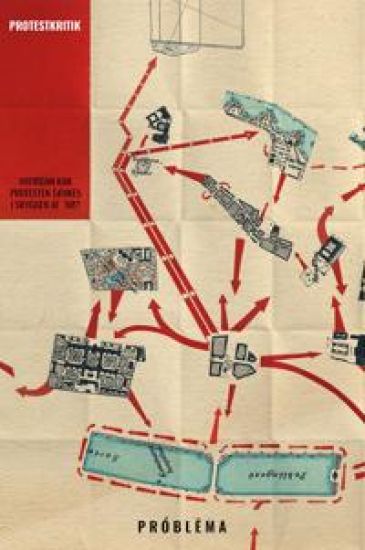
Protestkritik
Mikkel Bolt; Tania Ørum; Michael Hardt; Antonio Negri; Kirsten Hyldgaard; Kristian Thorup; Katrin Hjort; Gry Worre Halberg; Sisters Hope; Gustav Johannes Hoder; Rasmus Bro Clemmensen; Brian Benjamin Hansen
-
2020
sidottu
PROTESTKRITIK samler en række kritiske, analytiske, eksperimentelle og teoretiske tekster i lyset og den lange historiske skygge af oprøret i '68. Gennem elleve forskellige bidrag formuleres nye historiske analyser og aktuelle protestbevægelser såsom klimabevægelsen, #MeToo, De Gule Veste, Nuit Debout, Et andet universitet og Occupy analyseres.Bogen er en flertydig og fælles refleksion over protestens væsen, et møde mellem generationer, erfaringer og fagligheder, og en anledning til at reflektere over, hvordan vi kan bringe arven fra '68 med ind i fremtiden.MED BIDRAG FRA: Mikkel Bolt, Kirsten Hyldgaard, Michael Hardt & Antonio Negri, Tania Ørum, Brian Benjamin Hansen, Gry Worre Hallberg & Sisters Hope, Arkivaristerne, Katrin Hjort, Kristian Thorup, Rasmus Bro Clemmensen og Gustav Johannes Hoder.
This third and final volume of the series of writings by Antonio Negri examines how Spinoza’s thought constitutes a radical break with past ideas and an essential tool for envisaging a form of politics beyond capitalism. Negri shows how Spinoza’s ideas have facilitated radical renewal from their beginnings to the present day. It was the democratic freedoms and spirit of solidarity fostered in The Netherlands of the 17th century that allowed Spinoza to develop a radically new form of thought, redefining notions of the state and outlining a republican alternative to absolutist monarchy. In our own era, Negri argues that the rediscovery of Spinoza was critical in reinvigorating political theory. Instead of acquiescing to the economic order of capitalism and abandoning the class struggle, Spinoza’s ideas enable us to reconstruct a revolutionary perspective. His treatment of concepts such as multitude, necessity, and liberty have given us new ways of looking critically at our present, revealing that power must always be seen as a question of antagonism and class struggle. The writings that make up this volume – some written from prison as Negri fought for his own freedom – provide an important account of the enduring relevance of Spinoza’s thought. It will be of great interest to students and scholars of philosophy and political theory, as well anyone interested in radical politics today.
In recent years "leaderless" social movements have proliferated around the globe, from North Africa and the Middle East to Europe, the Americas, and East Asia. Some of these movements have led to impressive gains: the toppling of authoritarian leaders, the furthering of progressive policy, and checks on repressive state forces. They have also been, at times, derided by journalists and political analysts as disorganized and ineffectual, or suppressed by disoriented and perplexed police forces and governments who fail to effectively engage them. Activists, too, struggle to harness the potential of these horizontal movements. Why have the movements, which address the needs and desires of so many, not been able to achieve lasting change and create a new, more democratic and just society? Some people assume that if only social movements could find new leaders they would return to their earlier glory. Where, they ask, are the new Martin Luther Kings, Rudi Dutschkes, and Stephen Bikos? With the rise of right-wing political parties in many countries, the question of how to organize democratically and effectively has become increasingly urgent. Although today's leaderless political organizations are not sufficient, a return to traditional, centralized forms of political leadership is neither desirable nor possible. Instead, as Michael Hardt and Antonio Negri argue, familiar roles must be reversed: leaders should be responsible for short-term, tactical action, but it is the multitude that must drive strategy. In other words, if these new social movements are to achieve meaningful revolution, they must invent effective modes of assembly and decision-making structures that rely on the broadest democratic base. Drawing on ideas developed through their well-known Empire trilogy, Hardt and Negri have produced, in Assembly, a timely proposal for how current large-scale horizontal movements can develop the capacities for political strategy and decision-making to effect lasting and democratic change. We have not yet seen what is possible when the multitude assembles.
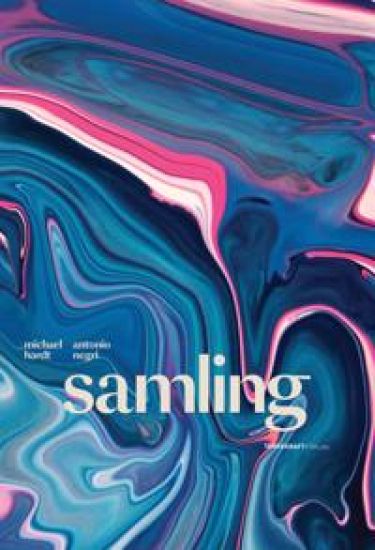
Varje år bevittnar vi fortfarande hur ”ledarlösa” sociala rörelser bryter fram. Från Nordafrika och Mellanöstern till Europa, från Nordamerika till Ostasien, har dessa rörelser överraskat och förbryllat journalister, analytiker, politiska aktörer, poliskårer och regeringar. Också aktivisterna själva har ofta haft svårt att förstå och bedöma styrkan och effektiviteten i de nya horisontella rörelserna. Varför har dessa rörelser, som ger uttryck för behoven och begären hos så många människor, inte lyckats uppnå bestående förändringar och ett mer rättvist samhälle? Somliga tror att om de sociala rörelserna bara kunde hitta nya ledare skulle de återfå sin forna glans och kunna förverkliga projekt för social omvandling och frigörelse. Var, frågar de sig, kan vi idag hitta en ny Martin Luther King Jr, en Rudi Dutschke, en Patrice Lumumba eller en Steve Biko? Vart har alla ledare tagit vägen? Även om dagens ledarlösa och spontana politiska organisationer inte räcker, är det varken möjligt eller önskvärt att återgå till mer traditionella och centraliserade former av politiskt ledarskap. Vad som i stället krävs, menar Michael Hardt och Antonio Negri, är en omkastning av rollerna mellan multituden och ledarna i de politiska rörelserna. Ledarna bör hålla sig till det kortsiktiga, taktiska agerandet, medan multituden styr över strategin. Med andra ord bör de långsiktiga målen formuleras av kollektivet, snarare än av vissa utvalda förgrundsfigurer. Genom att vidareutveckla idéerna från sin välkända Imperiet-trilogi har Hardt och Negri i Samling utarbetat ett angeläget förslag om hur dagens stora horisontella rörelser kan utveckla en kollektiv förmåga till strategiskt tänkande och politiskt beslutsfattande för att uppnå bestående demokratiska förändringar.
Fronesis 3-4. Konflikt
Per Albin Hansson; Antonio Negri; Floya Anthias; Iris Marion Young; Chantal Mouffe; Richard Rorty; Nira Yuval-Davis; Slavoj Zizek; Yvonne Hirdman
Fronesis
2018
nidottu
Vi lever i en tid då den politiska samstämmigheten har gjorts till dygd inom politiken. Under 1990- och 2000-talet lämnade många socialdemokratiska partier den polariserande vänsterpositionen till förmån för det harmoniska mittenfältet. Samtidigt är det just frånvaron av politiska konflikter och reella alternativ som har banat väg för ytterhögerns framgångar. Och med den ekonomiska globaliseringen minskar kapitalets behov av att söka samförstånd med såväl stat som fackföreningsrörelse. I Fronesis nr 3–4 uppmärksammas politikens nödvändiga konfliktdimension. Innehåll i Fronesis nr 3-4 (192 sidor): Thomas Tidholm: Den politiska situationen Anders Kalat och Cecilia von Otter: Politik är antagonism Anders Kalat och Camilla Lundberg: Politisk identitet och antagonism: klass, kön och etnicitet Chantal Mouffe: Hegemoni och nya politiska subjekt: med sikte mot ett nytt demokratibegrepp Floya Anthias och Nira Yuval-Davis: Att sätta feminismen i sin kontext – genusmässiga, etniska och klassmässiga skiljelinjer Slavoj Zizek: Mångkulturalismen eller den multinationella kapitalismens kulturella logik Klas Gustavsson: Negri, Sinisi och den politiska ekonomin John Sinisi: Hobbes skugga Antonio Negri: Keynes och den kapitalistiska teorin om staten Yvonne Hirdman: Ett småberusat middagstal Per-Albin Hansson: Kvinnokraften LO:s kongress 1936 (protokoll): Saltsjöbadsförhandlingarna och samförståndet Iris Young: Uppror i det välfärdskapitalistiska samhället Linnea Nilsson: En politik utan antagonismer? Perry Anderson: En kommentar: Makt, politik och upplysningen Helen Wilkinson: Fortfarande det Andra könet Richard Rorty: Tillbaka till klasspolitiken
This second volume of a new three-part series of Antonio Negri's work is focussed on the consequences of the rapid process of deindustrialisation that has occurred across the West in recent years.In this volume Negri investigates exactly what happens when the class subjects of industrial capitalism are demobilised and the factories close. Evidently capital continues to make profit, but how and where? According to Negri, the creation of value extends beyond the factory walls to embrace the whole of society; the 'mass worker' of industrialism gives way to the 'socialised worker' (operaio sociale) and the terrain of exploitation now becomes the whole of human life. In postmodernity, the metropolis becomes the privileged arena of value extraction. We must therefore understand the global city, with its stratifications, its enclosures and its resistances. Old categories of the private and the public are inadequate to describe the new matrix of production, which is characterised rather by the 'common', the productive space of cognitive and immaterial labour. Today's metropolis can be defined as a space of antagonisms between forms of life produced, on the one hand, by finance capital (the capital that operates around rents), and on the other by the 'cognitive proletariat'. The central question is then how 'the common' of the latter can be mobilised for the destruction of capitalism.In an analysis that runs from the Italian workerism (operaismo) of the 1970s to the present day, From the Factory to the Metropolis offers readers valuable insight into the far-reaching impact of deindustrialisation, presenting both the challenges and opportunities. It will appeal to the many interested in the continuing development of Negri's project and to anyone interested in radical politics today.