Kirjojen hintavertailu. Mukana 12 152 606 kirjaa ja 12 kauppaa.

Kirjailija

Boethius

Kirjat ja teokset yhdessä paikassa: 73 kirjaa, julkaisuja vuosilta 1973-2025, suosituimpien joukossa Boece Console Par La Philosophie. Vertaile teosten hintoja ja tarkista saatavuus suomalaisista kirjakaupoista.

Mukana myös kirjoitusasut: Boëthius

73 kirjaa

Kirjojen julkaisuhaarukka 1973-2025.

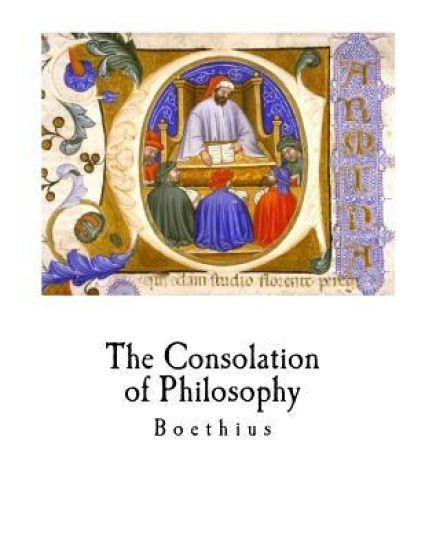
The Consolation of Philosophy
Written while Boethius was in prison awaiting execution, The Consolation of Philosophy consists of a dialogue in alternating prose and verse between the author, lamenting his own sorrows, and a majestic woman, who is the incarnation of his guardian Philosophy. The woman develops a modified form of Neoplatonism and Stoicism, demonstrating the unreality of earthly fortunes, then proving that the highest good and the highest happiness are in God, and reconciling the apparent contradictions concerning the existence of everything.
Boethius: On Aristotle on Interpretation 4-6
Boethius (c. 480-c. 525) was a Christian philosopher and author of many translations and works of philosophy, most famously the Consolations of Philosophy which were probably written when he was under house arrest, having been accused of treason by King Theoderic the Great. He was subsequently executed. On Interpretation is the second part of the Organon, as Aristotle's collected works on logic are known; it deals comprehensively and systematically with the relationship between logic and language. In his first six chapters, Aristotle defines name, verb, sentence, statement, affirmation and negation. Boethius preserves lost interpretations by two of the greatest earlier interpreters, Alexander and Porphyry, and the defence of the work's authenticity against criticism. He records the idea of Porphyry that Aristotelians believe in three types of name and verb, written, spoken and mental, in other words a language of the mind. Boethius' commentary formed part of his project to bring knowledge of Plato and Aristotle to the Latin-speaking world. It had great influence, remaining the standard introduction to On Interpretation throughout the Latin Middle Ages.
How to Cope

How to Cope

Boethius

PRINCETON UNIVERSITY PRESS
2025
sidottu
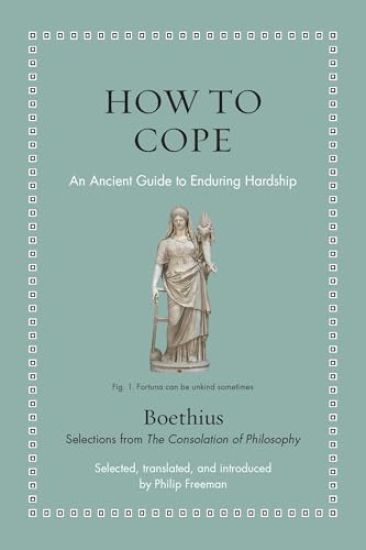
A vivid and accessible new translation of essential selections from Boethius’s Consolation of Philosophy—a moving classic about facing life’s worst events with courage and hopeWhat do you do when your life has fallen apart? Fifteen hundred years ago, a Roman nobleman named Boethius (ca. 480–524 CE) asked this question as he was sitting in a prison cell waiting to die, accused—probably unjustly—of treason. Boethius had been a rich and powerful man with all a person could want in life, but now he had lost everything. Shaken, he wondered how such terrible misfortune could have happened to him and why life was so unfair. When Philosophy herself appears in his cell and confronts Boethius, the conversation that follows between the two on the nature of evil and why humans suffer is as powerful and inspiring today as it was to its first readers. In How to Cope, Philip Freeman presents a lively modern translation of essential selections from Boethius’s classic, complete with an introduction and the original Latin on facing pages.This translation vividly captures Boethius’s journey from bitterness and anger to reconciliation and peace, showing how ancient philosophy, especially Stoicism, can help readers deal with adversity in their own lives. The book reveals the qualities that have made The Consolation of Philosophy one of the most popular and influential works of classical and world literature, and an inspiration to countless writers, including Thomas Aquinas, Dante, and Chaucer.
Filosofins tröst

Filosofins tröst

Boethius; Johan Sehlberg

Bokförlaget Faethon
2025
sidottu
Anicius Manlius Severinus Boethius (480524), vanligen bara Boethius, var en romersk statsman, matematiker och filosof. Han skrev flera verk, särskilt om musik, och översatte grekisk filosofi till latin. Hans översättningar var normerade i mer än ett halvt årtusende och dessa liksom hans egna texter har präglat europeisk kulturhistoria. På höjden av sin karriär arresterades han, anklagad för att ha konspirerat mot kung Theodorik den store. Boethius förnekade, men döms till döden. Det är i väntan på sin avrättning som han författar sitt viktigaste verk: De consolatione philosophiae, eller Filosofins tröst. Det är ett verk som 1500 år efter att det skrevs fortfarande vänder sig mot läsaren med samma kraft och tvingar oss ta ställning till vad som är värt att försvara och dö för. Här föreligger Filosofins tröst i Bertil Caval­lins (19342015) klassiska översättning. Cavallin var en av våra skickligaste översättare från antik grekiska och latin, och författade även läroböcker i klassiska språk. Han har försett översättningen med såväl inledning som rikliga kommentarer. Denna utgåva har ett nyskrivet efterord av filosofen Johan Sehlberg.
The Consolation of Philosophy (Royal Collector's Edition) (Case Laminate Hardcover with Jacket)
The Consolation of Philosophy was written in 523 AD during a one-year imprisonment Boethius served while awaiting trial-and eventual execution-for the alleged crime of treason under King Theodoric the Great. Boethius held the prestigious office of magister officiorum in Rome, but was brought down by treachery. The text reflects on how evil can exist in a world governed by God and how happiness is still attainable amidst fickle fortune, and considers the nature of happiness and God.The Consolation of Philosophy has been described as the single most important and influential work in the West on Medieval and early Renaissance Christianity, as well as the last great Western work of the Classical Period. Readers of the text were encouraged not to seek worldly goods such as money and power, but to seek internalized virtues. With its note of fatalism and its affinities with the Christian doctrine of humility, The Consolation of Philosophy stands midway between the pagan philosophy of Seneca the Younger and the later Christian philosophy of consolation represented by Thomas Kempis.This case laminate collector's edition includes a Victorian inspired dust-jacket.
The Consolation of Philosophy
Written while Boethius was in prison awaiting execution, The Consolation of Philosophy consists of a dialogue in alternating prose and verse between the author, lamenting his own sorrows, and a majestic woman, who is the incarnation of his guardian Philosophy. The woman develops a modified form of Neoplatonism and Stoicism, demonstrating the unreality of earthly fortunes, then proving that the highest good and the highest happiness are in God, and reconciling the apparent contradictions concerning the existence of everything.
Trost der Philosophie (Großdruck)
Boethius: Trost der Philosophie Lesefreundlicher Gro druck in 16-pt-Schrift Gro format, 210 x 297 mm Berliner Ausgabe, 2019 Durchgesehener Neusatz mit einer Biographie des Autors bearbeitet und eingerichtet von Theodor Borken Entstanden um 523. Erstdruck unter dem Titel De consolatione philosophiae, Savigliano (?) 1470. Erste (fr hneuhoch-)deutsche bersetzung (anonym) unter dem Titel Das puech von dem trost der weisshait des maiesters Boecy, N rnberg 1473. Der Text folgt der bersetzung durch Richard Scheven von 1893. Textgrundlage ist die Ausgabe: Boetius: Die Tr stungen der Philosophie. bersetzt von Richard Scheven, Leipzig: Philipp Reclam jun., o.J. Umschlaggestaltung von Thomas Schultz-Overhage. Gesetzt aus der Minion Pro, 16 pt. Henricus Edition Deutsche Klassik UG (haftungsbeschr nkt)
Trost der Philosophie (Großdruck)
Boethius: Trost der Philosophie Lesefreundlicher Gro druck in 16-pt-Schrift Gro format, 210 x 297 mm Berliner Ausgabe, 2019 Durchgesehener Neusatz mit einer Biographie des Autors bearbeitet und eingerichtet von Theodor Borken Entstanden um 523. Erstdruck unter dem Titel De consolatione philosophiae, Savigliano (?) 1470. Erste (fr hneuhoch-)deutsche bersetzung (anonym) unter dem Titel Das puech von dem trost der weisshait des maiesters Boecy, N rnberg 1473. Der Text folgt der bersetzung durch Richard Scheven von 1893. Textgrundlage ist die Ausgabe: Boetius: Die Tr stungen der Philosophie. bersetzt von Richard Scheven, Leipzig: Philipp Reclam jun., o.J. Umschlaggestaltung von Thomas Schultz-Overhage. Gesetzt aus der Minion Pro, 16 pt. Henricus Edition Deutsche Klassik UG (haftungsbeschr nkt)
The Consolation of Philosophy

The Consolation of Philosophy

Boethius

Digireads.com
2018
pokkari
Born in the late 5th century AD, Boethius was a Roman statesman and philosopher who would come into the service of the Ostrogothic ruler of Italy, Theodoric the Great. Ultimately he would rise to the position of magister officiorum, the head of all the government and court services. In 523 AD he would find himself accused of treasonous correspondence with Justin I, a charge that would land him in prison and ultimately lead to his execution. During Boethius's year-long imprisonment leading up to his execution he wrote "The Consolation of Philosophy," a work that would become regarded as one of the most important and influential works from medieval times. "The Consolation of Philosophy" is a classical exposition of human nature as Boethius reflects on the treacherous betrayal that led to his fall from favor with his lord. In it he ponders the universal question of Theodicy, or why a benevolent and all powerful God allows evil to manifest in the world, and on the transitory nature of fortune. Meant to provide himself with some solace in the face of his fated execution, Boethius' "The Consolation of Philosophy" is a work that has provided spiritual guidance to those in despair ever since its first appearance. This edition is printed on premium acid-free paper.