Kirjailija
Roland Barthes
Kirjat ja teokset yhdessä paikassa: 100 kirjaa, julkaisuja vuosilta 1966-2026, suosituimpien joukossa Roland Barthes Reader. Vertaile teosten hintoja ja tarkista saatavuus suomalaisista kirjakaupoista.
100 kirjaa
Kirjojen julkaisuhaarukka 1966-2026.
An introduction to the thinking of the French intellectual, Roland Barthes, as applied to such diverse topics as Gide, Garbo, striptease, photography and the Eiffel Tower. The pieces in this collection were written over a period of three decades.
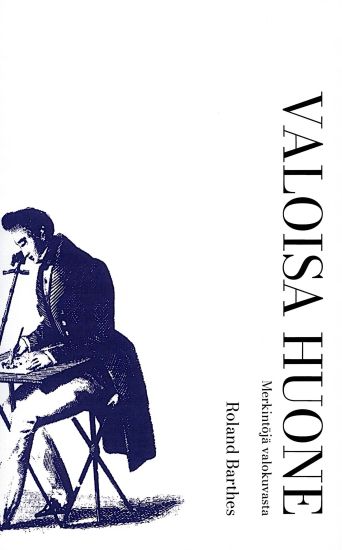
Ranskalainen kirjallisuudentutkija ja esseisti Roland Barthes (1915-1980) kirjoitti vuonna 1979 valokuvaa käsittelevän tutkielman, joka julkaistiin seuraavana vuonna nimellä Valoisa huone (La Chambre claire). Tämä pitkä essee jäi Barthesin viimeiseksi teokseksi. Reilun neljänkymmenen vuoden kuluessa siitä on tullut valokuvateorian ohittamaton klassikko, jota on tulkittu ahkerasti eri näkökulmista samalla, kun valokuvauksen tekniikka on mullistunut. Kirjailija, valokuvataiteen lehtori Hanna Weseliuksen ja professori Marjaana Kellan uusi suomennos perustuu viimeaikaiseen kansainväliseen tutkimukseen ja teoksesta käytyyn kriittiseen keskusteluun. Suomennos pyrkii tekemään oikeutta Barthesin kirjoitustavan ja argumentaation persoonalliselle luonteelle, joka perustui hänen samanaikaisiin filosofisiin pohdintoihinsa. Julkaisu on myös tehty kunnioittaen alkuperäisedition kokoonpanoa, eikä se sisällä esipuhetta tai selityksiä. Samaan aikaan suomennoksen kanssa julkaistaan Varjokuvain-niminen kommentaarikirjanen. Se sisältää suomentajien johdannon Barthesin tekstiin sekä kaksi esseetä sen herättämistä aiheista. Kella esittelee "Järkähtämätön"-esseessään Barthesin valokuva-ajattelua ja muutamien buddhalaisten käsitteiden käyttöä Valoisassa huoneessa. Weselius taas kirjoittaa kirjoituksen ja valokuvan yhtymäkohdista otsikolla "Kirjoittaa kuin valokuva". Tämä yhteisnide sisältää nuo molemmat teoksen kartonkikuoreen pakattuna.
Ranskalainen kirjallisuudentutkija ja esseisti Roland Barthes (1915-1980) kirjoitti vuonna 1979 valokuvaa käsittelevän tutkielman, joka julkaistiin seuraavana vuonna nimellä Valoisa huone, alaotsikoltaan Merkintöjä valokuvasta (La Chambre claire: note sur la photographie). Tämä pitkä essee jäi Barthesin viimeiseksi teokseksi. Reilun neljänkymmenen vuoden kuluessa siitä on tullut valokuvateorian ohittamaton klassikko. Tätä erikoislaatuista tekstiä on luettu ja tulkittu ahkerasti eri näkökulmista samalla, kun valokuvauksen tekniikka on uudella vuosisadalla mullistunut. Kirjailija, valokuvataiteen lehtori Hanna Weseliuksen ja professori Marjaana Kellan uusi suomennos perustuu viimeaikaiseen kansainväliseen tutkimukseen ja teoksesta käytyyn kriittiseen keskusteluun. Suomennos pyrkii tekemään oikeutta Barthesin kirjoitustavan ja argumentaation persoonalliselle luonteelle, joka perustui hänen samanaikaisiin filosofisiin pohdintoihinsa. Julkaisu on myös tehty kunnioittaen alkuperäisedition kokoonpanoa ja graafista muotoa, eikä se sisällä esipuhetta tai selityksiä. Samaan aikaan Valoisan huoneen kanssa julkaistaan Varjokuvain-niminen kirjanen, joka sisältää suomentajien johdannon Valoisaan huoneeseen sekä kaksi esseetä Barthesin herättämistä aiheista. Nämä kaksi kirjaa ovat saatavana myös kartonkikuoreen pakattuna pakettina.
Problems in General Linguistics - An Expanded Edition, Volume 1
Emile Benveniste; Roland Barthes; Jordan K. Skinner; Mary Elizabeth Meek
HAU Society Of Ethnographic Theory
2025
nidottu
First published fifty years ago, Emile Benveniste's two-volume Problemes de linguistique generale revolutionized the study of linguistics and remains among the most influential texts in the field. This expanded edition of the first volume presents the original English translation by Mary Elizabeth Meek, produced in close collaboration with Benveniste himself, along with his hitherto untranslated articles on play, translation, singular and plural forms, and Indigenous North American languages. These works are contextualized by an introduction by editor Jordan K. Skinner and a preface by Roland Barthes. This new edition will delight linguists and philosophers already familiar with Benveniste and introduce his work to a new generation of students. Benveniste studies are going through an enthusiastic revival in Europe; after reading this book, readers elsewhere will understand why.
Ny norsk utgave av Roland Barthes klassiker om retorikk.Denne lille håndboken henvender seg til alle som vil vite noe om retorikkens vesen og historie. Boken gir en enestående innføring i talekunstens systematikk, og er samtidig gjennomsyret av en kritisk refleksjon over språkets makt.Punkt for punkt går Barthes gjennom retorikkens dynamiske og detaljerte klassifiseringer – og konkluderer med at om vi i dag ikke lenger kan støtte oss til et fast retorisk system, så er det nødvendig å kjenne dets historie, for verden er fremdeles «utrolig full av gammel retorikk».
"Armudiskursuse katkeid" (Fragments d'un discours amoureux) on Prantsuse literaadi Roland Barthes'i (1915-1980) tundeline teekond läbi armunu keeleliste puhangute, mida ajendavad pealtnäha tühised, juhuslikud asjaolud. Raamat ilmus 1977. aastal ja sellest sai Barthes'i eluajal tema kõige menukam teos. Selle üheks põhjuseks oli kindlasti asjaolu, et romantilise armastuse saladusele polnud varem sel moel püütud läheneda. Barthes'i raamat on esseistlik fragmentaarium, kus on segamini uurimuslik-pedagoogiline lähenemine, kirjanduslik eksperiment ja tema isiklik armuelu. Barthes soovib paljastada iga armutunde keelelaadse olemuse. Armunu on tähenduse sulatusahjus, ta üritab omistada hullumeelse kombel kõigele ja igal pool mõtet ning seetõttu allub iga probleem ja lahendus tema armastuses verbaalsele struktuurile. Armunu armastus väljendub keelelistes ühikutes või olukordades, mille adekvaatsust samas keegi peale ta enese ei taga. Seetõttu on armunu oma armastuses lootusetult üksi. Nii valgustabki Barthes halastamatult, katke katke haaval armunu monomaanilist olukorda, kuid heidab helgi ka võimalikele pagemisteedele. Ilmselt just sel põhjusel on inimesed mitme põlvkonna vältel - nii selgituseks kui ka inspiratsiooniks - jätkuvalt Barthes'i raamatu poole pöördunud.
»Hur får bilden sin mening? Var upphör meningen och om den upphör, vad finns då bortom den?« Dessa frågor inleder professor Hans Haydens förord till Roland Barthes korta, men mycket inflytelserika text, Bildens retorik som publicerades första gången 1964. Texten introducerar en semiotisk bildanalys och är inledningen på Barthes livslånga tänkande kring bilden och fotografiet. Här presenteras boken i svensk översättning av Kurt Aspelin. Barthes skriver i en passage: »Som strax ska framgå tydligare, är varje bild polysemisk, mångtydig.« Det sätt på vilket Barthes sedan utvecklar analysen har blivit enormt inflytelserikt. Utifrån en enkel reklambild analyseras inte bara vad bilden säger oss utan hur den gör det.Detta är den tredje upplagan.
"Simply a Particular Contemporary": Interviews, 1970–79
Roland Barthes
SEAGULL BOOKS LONDON LTD
2023
nidottu
A major collection of essays and interviews from an iconic 20th-century philosopher in five volumes, now all available together in paperback. Roland Barthes was a restless, protean thinker. A constant innovator—often as a daring smuggler of ideas from one discipline to another—he first gained an audience with his pithy essays on mass culture and then went on to produce some of the most suggestive and stimulating cultural criticism of the late twentieth century, including Empire of Signs, The Pleasure of the Text, and Camera Lucida. In 1976, this one-time structuralist outsider was elected to a chair at France’s preeminent Collège de France, where he chose to style himself as a professor of literary semiology until his death in 1980. The greater part of Barthes’s published writings has been available to a French audience since 2002, but now, translator Chris Turner presents a collection of essays, interviews, prefaces, book reviews, and other journalistic material for the first time in English and divided into five themed volumes. Volume five, Simply a Particular Contemporary includes four interviews Barthes conducted between 1970 and 1979, varying widely in style and content.
"The `Scandal` of Marxism" and Other Writings on Politics
Roland Barthes; Chris Turner
SEAGULL BOOKS LONDON LTD
2023
nidottu
A major collection of essays and interviews from an iconic 20th-century philosopher in five volumes, now all available together in paperback. Roland Barthes was a restless, protean thinker. A constant innovator—often as a daring smuggler of ideas from one discipline to another—he first gained an audience with his pithy essays on mass culture and then went on to produce some of the most suggestive and stimulating cultural criticism of the late twentieth century, including Empire of Signs, The Pleasure of the Text, and Camera Lucida. In 1976, this one-time structuralist outsider was elected to a chair at France’s preeminent Collège de France, where he chose to style himself as a professor of literary semiology until his death in 1980. The greater part of Barthes’s published writings has been available to a French audience since 2002, but now, translator Chris Turner presents a collection of essays, interviews, prefaces, book reviews, and other journalistic material for the first time in English and divided into five themed volumes. Volume two, The “Scandal” of Marxism, contains a wide range of his more overtly political writings, with an emphasis on his early work and the serious national turbulence in the French 1950s.
"A Very Fine Gift" and Other Writings on Theory
Roland Barthes; Chris Turner
SEAGULL BOOKS LONDON LTD
2023
nidottu
A major collection of essays and interviews from an iconic 20th-century philosopher in five volumes, now all available together in paperback. Roland Barthes was a restless, protean thinker. A constant innovator—often as a daring smuggler of ideas from one discipline to another—he first gained an audience with his pithy essays on mass culture and then went on to produce some of the most suggestive and stimulating cultural criticism of the late twentieth century, including Empire of Signs, The Pleasure of the Text, and Camera Lucida. In 1976, this one-time structuralist outsider was elected to a chair at France’s preeminent Collège de France, where he chose to style himself as a professor of literary semiology until his death in 1980. The greater part of Barthes’s published writings has been available to a French audience since 2002, but now, translator Chris Turner presents a collection of essays, interviews, prefaces, book reviews, and other journalistic material for the first time in English and divided into five themed volumes. In volume one, A Very Fine Gift, Barthes attempts to frame his lifelong curiosities in theoretical form, from his early musings on the sociology of literature through his high period of structuralism to his later reflections on Derrida.
Signs and Images – Writings on Art, Cinema and Photography
Roland Barthes; Chris Turner
SEAGULL BOOKS LONDON LTD
2023
nidottu
A major collection of essays and interviews from an iconic 20th-century philosopher in five volumes, now all available together in paperback. Roland Barthes was a restless, protean thinker. A constant innovator—often as a daring smuggler of ideas from one discipline to another—he first gained an audience with his pithy essays on mass culture and then went on to produce some of the most suggestive and stimulating cultural criticism of the late twentieth century, including Empire of Signs, The Pleasure of the Text, and Camera Lucida. In 1976, this one-time structuralist outsider was elected to a chair at France’s preeminent Collège de France, where he chose to style himself as a professor of literary semiology until his death in 1980. The greater part of Barthes’s published writings has been available to a French audience since 2002, but now, translator Chris Turner presents a collection of essays, interviews, prefaces, book reviews, and other journalistic material for the first time in English and divided into five themed volumes. Volume four, Signs and Images, gathers pieces related to his central concerns—semiotics, visual culture, art, cinema, and photography—and features essays on Marthe Arnould, Lucien Clergue, Daniel Boudinet, Richard Avedon, Bernard Faucon, and many more.
"Masculine, Feminine, Neuter" and Other Writings on Literature
Roland Barthes; Chris Turner
SEAGULL BOOKS LONDON LTD
2023
nidottu
A major collection of essays and interviews from an iconic 20th-century philosopher in five volumes, now all available together in paperback. Roland Barthes was a restless, protean thinker. A constant innovator—often as a daring smuggler of ideas from one discipline to another—he first gained an audience with his pithy essays on mass culture and then went on to produce some of the most suggestive and stimulating cultural criticism of the late twentieth century, including Empire of Signs, The Pleasure of the Text, and Camera Lucida. In 1976, this one-time structuralist outsider was elected to a chair at France’s preeminent Collège de France, where he chose to style himself as a professor of literary semiology until his death in 1980. The greater part of Barthes’s published writings has been available to a French audience since 2002, but now, translator Chris Turner presents a collection of essays, interviews, prefaces, book reviews, and other journalistic material for the first time in English and divided into five themed volumes. Volume three, Masculine, Feminine, Neuter, consists of his writing on literature, covering his peers and influences, writers in French and other languages, contemporary and historical writers, and world literature.
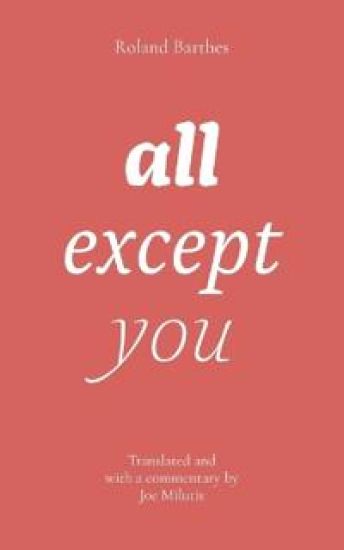
Roland Barthes's consideration of the drawings of New York artist Saul Steinberg - originally an artist book posthumously published in France in 1983 - is historically important as one of the last remaining books in Barthes's oeuvre to be translated into English.all except you continues Barthes's inquiries into image-text relations, specifically the indiscernible horizon where writing meets drawing, one becoming the other. In his attempt to blur these registers, he produces less a critique than a translation, an attempt to merge author and artist, to see himself and his desire in the work of Steinberg, using the resources of structural linguistics and psychoanalysis. The impertinence of his critique mimics the deformations of Steinberg's drawings that are "sassy, deformed by the look on high, stretched, excessively crunched." We become suspicious that Barthes is writing more into Steinberg than Steinberg holds, or even that Steinberg is an alibi for some other aim that is withheld.Joe Milutis's translation takes the opportunity of a running commentary, in the form of translator's notes, to amplify Barthes's impertinent reading and authorial one-upmanship by speculating on the presumed failures and detoured transferences of the text. Since Barthes is less concerned with writing about art than writing through it, Milutis's "double session" perhaps provides the most faithful translation of the Barthesian eros in his write-through of the write-through.Roland Barthes (1915-1980) was one of the most influential writers and theoreticians of the 20th century, expanding our notions of what constitutes a literary text and writing itself. He is the author of Mythologies, Writing Degree Zero, The Pleasure of the Text, and Camera Lucida.Joe Milutis is a writer, media artist, and Associate Professor of Interdisciplinary Arts and the MFA in Creative Writing and Poetics at the University of Washington-Bothell. He is the author of Failure: A Writer's Life (Zer0 Books, 2013) and Ether: The Nothing That Connects Everything (Minnesota, 2006).
In 1941, Roland Barthes defended his Diplome d'etudes superieures at the Sorbonne University under the direction of Paul Mazon. The dissertation on evocations and incantations in Greek tragedy analyzes the passages where men through song call the gods and the dead to manifest themselves.
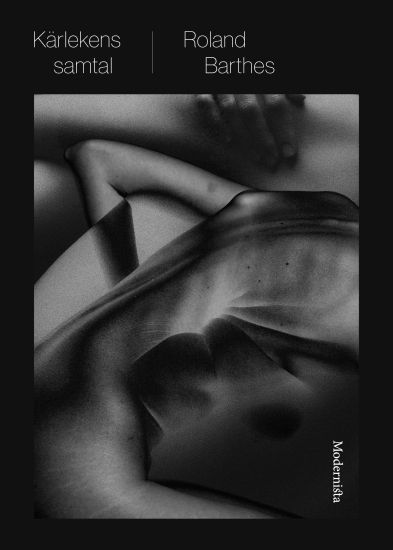
En av världslitteraturens mest egensinniga böcker om kärlek »En underbar bok.« Torbjörn Elensky, Sveriges Radio, P1 »Det är en lika fascinerande som svårplacerad bok. Sällan formuleras Roland Barthes tankar om språkets otillräcklighet så mångbottnat och så passionerat som när han skriver om kärleken.« Svenska DagbladetKärlekens samtal var revolutionerande när den kom ut 1977 och har sedan dess räknats till världslitteraturens mest egensinniga böcker om kärlek. I en samling korta, intensiva texter skriver Roland Barthes om den älskandes alla känsligaste ögonblick: I mötet, väntan, bekräftelsen, omfamningen, hänryckningen, förvirringen, ängslan, svartsjukan, grälet, förståelsen, ömheten. Samt om hur kärleken manifesterar sig i språket. I dialoger med allt från kanoniska storheter som Freud, Goethe, Platon, Nietzsche och Proust till zen-mystiker, reflekterar Barthes över ämnet som så få stora filosofer vågat sig på i grunden men som vi alla egentligen helst läser om.Kärlekens samtal [Fragments d un discours amoureux] presenteras här på svenska med de tjugo ytterligare fragment - sammanlagt över 50 sidor - som ingick i de föreläsningar Barthes höll vid verkets tillkomst, och som publicerats postumt. I översättning av Leif Janzon och med ett nyskrivet förord av Carin Franzén, professor i språk och kultur på Linköpings universitetROLAND BARTHES [1915-1980] är en av historiens mest berömda och originella litteraturkritiker, med stort inflytande över framväxten av teorier som strukturalism, poststrukturalism och semiotik. Till hans viktigaste verk hör förutom Kärlekens samtal även Textens njutning, Litteraturensnollpunkt, Mytologier och S/Z.»Det är vackert, känslosamt, sökande. Det är, som Carin Franzén skriver i sitt fina förord, ett utpekande av kärlekens beroende av symboliska koder.« Ingrid Bosseldal, Göteborgs-Posten »Otroligt fin bok om den förälskade människans väg mot kärleken.« Litteraturvetare
I essän Eiffeltornet från 1964 undersöker Roland Barthes Eiffeltornet som symbol för Paris. Översättning och efterord av Daniel Pedersen.
Britannicus & Bérénice
Jean Racine; Sofia Warkander; Roland Barthes

Bokförlaget Faethon
2020
nidottu
Jean Racine (16391699) är den främste representanten för franskklassicismen och hans betydelse för fransk teater kan knappast överskattas. I denna volym presenteras två av hans berömda tragedier Britannicus och Bérénice, i översättning av Göran O. Eriksson och med förord översatta av Jan Stolpe. De följs av utdrag från en av 1900-talets mer inflytelserika texter om Racine: två kapitel ur Roland Barthes Sur Racine för första gången på svenska av Sofia Warkander, som också skrivit ett initierat efterord.
Barthes investigation into the meaning of photographs is a seminal work of twentieth-century critical theory. Examining themes of presence and absence, these reflections on photography begin as an investigation into the nature of photographs - their content, their pull on the viewer, their intimacy.