Kirjojen hintavertailu. Mukana 12 577 017 kirjaa ja 12 kauppaa.

Kirjailija

Roland Barthes

Kirjat ja teokset yhdessä paikassa: 100 kirjaa, julkaisuja vuosilta 1966-2026, suosituimpien joukossa Roland Barthes Reader. Vertaile teosten hintoja ja tarkista saatavuus suomalaisista kirjakaupoista.

100 kirjaa

Kirjojen julkaisuhaarukka 1966-2026.

How to Live Together

How to Live Together

Roland Barthes

Columbia University Press
2012
pokkari
In The Preparation of the Novel, a collection of lectures delivered at a defining moment in Roland Barthes's career (and completed just weeks before his death), the critic spoke of his struggle to discover a different way of writing and a new approach to life. The Neutral preceded this work, containing Barthes's challenge to the classic oppositions of Western thought and his effort to establish new pathways of meaning. How to Live Together predates both of these achievements, a series of lectures exploring solitude and the degree of contact necessary for individuals to exist and create at their own pace. A distinct project that sets the tone for his subsequent lectures, How to Live Together is a key introduction to Barthes's pedagogical methods and critical worldview. In this work, Barthes focuses on the concept of "idiorrhythmy," a productive form of living together in which one recognizes and respects the individual rhythms of the other. He explores this phenomenon through five texts that represent different living spaces and their associated ways of life: Emile Zola's Pot-Bouille, set in a Parisian apartment building; Thomas Mann's The Magic Mountain, which takes place in a sanatorium; Andre Gide's La Sequestree de Poitiers, based on the true story of a woman confined to her bedroom; Daniel Defoe's Robinson Crusoe, about a castaway on a remote island; and Pallidius's Lausiac History, detailing the ascetic lives of the desert fathers. As with his previous lecture books, How to Live Together exemplifies Barthes's singular approach to teaching, in which he invites his audience to investigate with him-or for him-and wholly incorporates his listeners into his discoveries. Rich with playful observations and suggestive prose, How to Live Together orients English-speaking readers to the full power of Barthes's intellectual adventures.

How to Live Together

How to Live Together

Roland Barthes

Columbia University Press
2012
sidottu
In The Preparation of the Novel, a collection of lectures delivered at a defining moment in Roland Barthes's career (and completed just weeks before his death), the critic spoke of his struggle to discover a different way of writing and a new approach to life. The Neutral preceded this work, containing Barthes's challenge to the classic oppositions of Western thought and his effort to establish new pathways of meaning. How to Live Together predates both of these achievements, a series of lectures exploring solitude and the degree of contact necessary for individuals to exist and create at their own pace. A distinct project that sets the tone for his subsequent lectures, How to Live Together is a key introduction to Barthes's pedagogical methods and critical worldview. In this work, Barthes focuses on the concept of "idiorrhythmy," a productive form of living together in which one recognizes and respects the individual rhythms of the other. He explores this phenomenon through five texts that represent different living spaces and their associated ways of life: Emile Zola's Pot-Bouille, set in a Parisian apartment building; Thomas Mann's The Magic Mountain, which takes place in a sanatorium; Andre Gide's La Sequestree de Poitiers, based on the true story of a woman confined to her bedroom; Daniel Defoe's Robinson Crusoe, about a castaway on a remote island; and Pallidius's Lausiac History, detailing the ascetic lives of the desert fathers. As with his previous lecture books, How to Live Together exemplifies Barthes's singular approach to teaching, in which he invites his audience to investigate with him-or for him-and wholly incorporates his listeners into his discoveries. Rich with playful observations and suggestive prose, How to Live Together orients English-speaking readers to the full power of Barthes's intellectual adventures.
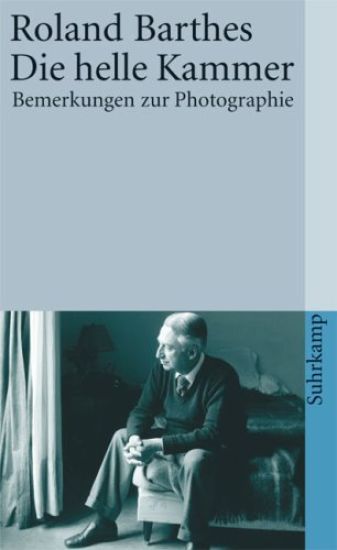
Das Reich der Zeichen

Das Reich der Zeichen

Roland Barthes

SUHRKAMP VERLAG
2012
pokkari
Vorträge zur Veranstaltung an der Universiät Ulm im Mai 2006: -- Informationsfunktion versus Gläubigerschutz - Rechnungslegung für den Mit-telstand im Spannungsfeld -- Zeigt ein IFRS-Abschluss die wirtschaftliche Lage besser als ein HGB-Abschluss? -- IFRS für den Mittelstand - Rahmenbedingungen und Schwerpunkte der Anwen-dung -- IFRS-Abschlüsse - Eine Herausforderung für die Bankenaufsicht -- Nicht nur IFRS, sondern auch HGB - Die Modernisierung des deutschen Bilanz-rechts -- Die Abbildung der wirtschaftlichen Lage am Beispiel der Bilanzierung von Pensi-onsverpflichtungen nach HGB und IFRS
Writing Degree Zero

Writing Degree Zero

Roland Barthes

Hill Wang
2012
nidottu
Is there any such thing as revolutionary literature? Can literature, in fact, be political at all? These are the questions Roland Barthes addresses in "Writing Degree Zero," his first published book and a landmark in his oeuvre. The debate had engaged the European literary community since the 1930s; with this fierce manifesto, Barthes challenged the notion of literature's obligation to be socially committed. Yes, Barthes allows, the writer has a political and ethical responsibility. But the history of French literature shows that the writer has often failed to meet it and from Barthes's perspective, literature is committed to little more than the myth of itself. Expert and uncompromising, "Writing Degree Zero" introduced the themes that would soon establish Barthes as one of the leading voices in literary criticism."
Mourning Diary: October 26, 1977 - September 15, 1979
"In the sentence 'She's no longer suffering, ' to what, to whom does 'she' refer? What does that present tense mean?" --Roland Barthes, from his diary The day after his mother's death in October 1977, Roland Barthes began a diary of mourning. For nearly two years, the legendary French theorist wrote about a solitude new to him; about the ebb and flow of sadness; about the slow pace of mourning, and life reclaimed through writing. Named a Top 10 Book of 2010 by The New York Times and one of the Best Books of 2010 by Slate and The Times Literary Supplement, Mourning Diary is a major discovery in Roland Barthes's work: a skeleton key to the themes he tackled throughout his life, as well as a unique study of grief--intimate, deeply moving, and universal.
Travels in China

Travels in China

Roland Barthes

Polity Press
2011
sidottu
In 1974 Roland Barthes travelled in China as part of a small delegation of distinguished French philosophers and literary figures. They arrived in China just as the last stage of the Cultural Revolution was getting underway - the campaign to criticize Lin Biao and Confucius. While they were welcomed by writers and academics, the travelers were required to follow a pre-established itinerary, visiting factories and construction sites, frequenting shows and restaurants that were the mainstay of Western visitors to China in the 70s. Barthes planned to return from the trip with a book on China: the book never materialized, but he kept the diary notes he wrote at the time. The notes on things seen, smelled and heard alternate with reflections and remarks - meditations, critiques or notes of sympathy, an aside from the surrounding world. Published now for the first time more than thirty years after the trip, these notebooks offer a unique portrait of China at a time of turbulence and change, seen through the eyes of the world’s greatest semiotician.
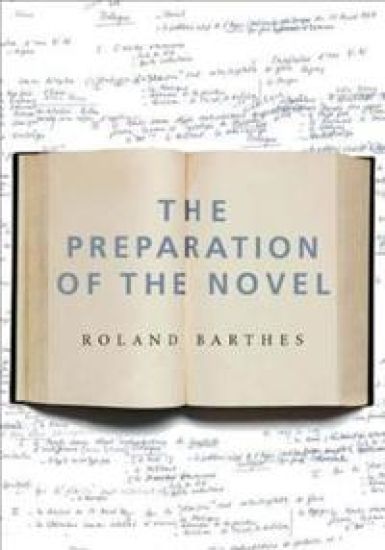
The Preparation of the Novel

The Preparation of the Novel

Roland Barthes

Columbia University Press
2010
pokkari
Completed just weeks before his death, the lectures in this volume mark a critical juncture in the career of Roland Barthes, in which he declared the intention, deeply felt, to write a novel. Unfolding over the course of two years, Barthes engaged in a unique pedagogical experiment: he combined teaching and writing to "simulate" the trial of novel-writing, exploring every step of the creative process along the way. Barthes's lectures move from the desire to write to the actual decision making, planning, and material act of producing a novel. He meets the difficulty of transitioning from short, concise notations (exemplified by his favorite literary form, haiku) to longer, uninterrupted flows of narrative, and he encounters a number of setbacks. Barthes takes solace in a diverse group of writers, including Dante, whose La Vita Nuova was similarly inspired by the death of a loved one, and he turns to classical philosophy, Taoism, and the works of Francois-Rene Chateaubriand, Gustave Flaubert, Franz Kafka, and Marcel Proust. This book uniquely includes eight elliptical plans for Barthes's unwritten novel, which he titled Vita Nova, and lecture notes that sketch the critic's views on photography. Following on The Neutral: Lecture Course at the College de France (1977-1978) and a third forthcoming collection of Barthes lectures, this volume provides an intensely personal account of the labor and love of writing.
The Preparation of the Novel

The Preparation of the Novel

Roland Barthes

Columbia University Press
2010
sidottu
Completed just weeks before his death, the lectures in this volume mark a critical juncture in the career of Roland Barthes, in which he declared the intention, deeply felt, to write a novel. Unfolding over the course of two years, Barthes engaged in a unique pedagogical experiment: he combined teaching and writing to "simulate" the trial of novel-writing, exploring every step of the creative process along the way. Barthes's lectures move from the desire to write to the actual decision making, planning, and material act of producing a novel. He meets the difficulty of transitioning from short, concise notations (exemplified by his favorite literary form, haiku) to longer, uninterrupted flows of narrative, and he encounters a number of setbacks. Barthes takes solace in a diverse group of writers, including Dante, whose La Vita Nuova was similarly inspired by the death of a loved one, and he turns to classical philosophy, Taoism, and the works of Francois-Rene Chateaubriand, Gustave Flaubert, Franz Kafka, and Marcel Proust. This book uniquely includes eight elliptical plans for Barthes's unwritten novel, which he titled Vita Nova, and lecture notes that sketch the critic's views on photography. Following on The Neutral: Lecture Course at the College de France (1977-1978) and a third forthcoming collection of Barthes lectures, this volume provides an intensely personal account of the labor and love of writing.
Grain Of The Voice

Grain Of The Voice

Roland Barthes

Vintage
2010
pokkari
In these interviews, given between 1962 and 1980, Barthes speaks about the development of his thought, explaining why and how he wrote his many books, paying tributes to philosophers, linguists, novelists, poets, painters and film-makers who have inspired him, as well as discussing how his life became dedicated to an exploration of semiotics.
Fashion System

Fashion System

Roland Barthes

Ccv
2010
pokkari
Fashion never ceases to interest psychologists, aestheticians and sociologists. Roland Barthes, however, examined fashion from a new point of view. In his endeavour to confine his love, outrage and passion for fashion to a system, Barthes created a work of literature that is witty, humane, personal and enormously stimulating
Writing Degree Zero & Elements of Semiology

Writing Degree Zero & Elements of Semiology

Roland Barthes

Vintage Classics
2010
pokkari
Semiology is the science of signs and symbols, and their role in culture and society. Writing Degree Zero is Barthes' introduction to his field of study, the basic definitions required in the analysis of speech, language, writing and style, delivered with a poet's insight from one of France's most famous literary critics .In Elements of Semiology Barthes presented a concise scientific definition of Saussurean linguistics and their aftermath. Published in 1967, this is a key text in the study of 'structuralism', which at that time was a relatively new critical movement rapidly gaining an international following.
Roland Barthes

Roland Barthes

Roland Barthes

Hill Wang
2010
nidottu
First published in 1977, Roland Barthes by Roland Barthes is the great literary theorist's most original work a brilliant and playful text, gracefully combining the personal and the theoretical to reveal Roland Barthes's tastes, his childhood, his education, his passions and regrets."
Camera Lucida: Reflections on Photography
Camera Lucida, Roland Barthes's personal, wide-ranging, and contemplative volume--and the last book he published--finds the author applying his influential perceptiveness and associative insight to the subject of photography.Commenting on artists such as Avedon, Clifford, Mapplethorpe, and Nadar, Barthes presents photography as being outside the codes of language or culture, acting on the body as much as on the mind, and rendering death and loss more acutely than any other medium. This groundbreaking approach established Camera Lucida as one of the most important books of theory on the subject, along with Susan Sontag's On Photography.