Kirjailija
Upton Sinclair
Kirjat ja teokset yhdessä paikassa: 574 kirjaa, julkaisuja vuosilta 1905-2026, suosituimpien joukossa Sylvia. Vertaile teosten hintoja ja tarkista saatavuus suomalaisista kirjakaupoista.
574 kirjaa
Kirjojen julkaisuhaarukka 1905-2026.
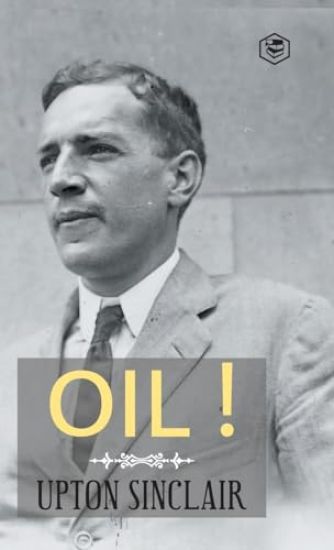

'A classic tale of greed and corruption' Erich Schlosser, author of Fast Food NationUpton Sinclair's searing, prophetic indictment of fossil fuels, and the inspiration for the film There Will Be BloodBased on the oil scandals of the Harding administration, Upton Sinclair's novel Oil! burst into the literary limelight amid soaring petroleum profits and gaping inequalities in 1927. Whether telling the story of the land, the ordinary civilian, or the heirs to oil fortune, Sinclair skilfully paints a vivid picture of the effects of corporate corruption, greed and how the so called 'American Century' was born.By turns a gripping family saga and anti-capitalist warning, Oil! ranks among the most important critiques of fossil energy ever written. An exhilarating novel, which anticipated how fossil fuels would shape the dilemmas of our present, Oil! looks toward a greener, more inclusive, and altogether more livable world yet to come.

Discover the story of Oil with this striking collector's edition from Union Square & Co.'s Signature Editions series The classic texts that shaped our culture feature exclusive cover art by distinguished artist Malika Favre. Her bold, graphic style gives each classic literature book a small masterpiece for a jacket. Collect the set or prize this Oil special edition as your showpiece literary classic. Oil follows James Arnold Ross and his son, James Arnold Ross Jr., as they do whatever it takes to run their very own oil well. Ross's son--nicknamed Bunny--provides an idealistic counterpoint to his father's avaricious dealings. Their story intertwines with that of Eli Watkins, a revivalist preacher who seeks spiritual power. As the stories of the Ross and Watkins families intertwine, the struggle between the material and the spiritual sharpens. Literary history and meaning: Oil , by Upton Sinclair, was first published in 1927. Set in California during the early twentieth century, the novel tells the story of the oil industry's rise to power and its impact on society, politics, and the environment. It is a searing indictment of capitalism and corporate greed, echoing Sinclair's earlier works, such as The Jungle. Its importance as a classic literature work lies in its unflinching portrayal of the human cost of industrialization and its exploration of themes such as corruption, social justice, and the struggle for economic equality. Its relevance today is evident in its commentary on the ongoing tensions between industry and the environment, as well as its exploration of the ethical dilemmas surrounding unchecked corporate power and wealth inequality.

Published in 1927, this masterpiece of realist fiction portrays a gripping tale of corruption and greed alongside a son's coming-of-age story. The basis for Paul Thomas Anderson's 2007 film There Will Be Blood, the saga follows the rise of an oil magnate through the eyes of his loving but increasingly pessimistic son. After writing The Jungle, a groundbreaking book that exposed harsh labor conditions, novelist Upton Sinclair was inspired by the 1920s Teapot Dome Scandal during Warren G. Harding's presidency. Sinclair delivers a scathing, satirical critique of social injustice during the early years of the California oil boom.
In Oil Upton Sinclair fashioned a novel out of the oil scandals of the Harding administration, providing in the process a detailed picture of the development of the oil industry in Southern California. Bribery of public officials, class warfare, and international rivalry over oil production are the context for Sinclair's story of a genial independent oil developer and his son, whose sympathy with the oilfield workers and socialist organizers fuels a running debate with his father. Senators, small investors, oil magnates, a Hollywood film star, and a crusading evangelist people the pages of this lively novel.

First published in 1927, "Oil " is an unflinching portrayal of greed and betrayal by Pulitzer Prize winning author Upton Sinclair. Famous for his groundbreaking work "The Jungle", which exposed the horribly unsafe conditions in the American meatpacking industry, Sinclair turned his critical eye toward the immorality of the emerging oil-drilling business. Set in Southern California and inspired by the Teapot Dome Scandal, "Oil " follows the fortunes of the Ross and Watkins families as they clash over property rights and the unionization of the oil workers. Bunny Ross is torn between loyalty to his family and his friendship with Paul and Ruth Watkins, as he becomes increasingly uneasy with his father's relentless greed and unethical business practices. Set amidst a backdrop of entertaining, lively, and well-drawn characters, Bunny must ultimately decide if he will side with kindness and humanity over his family and their love of power and wealth. "Oil " has endured as one of Sinclair's most readable and absorbing works and its themes of corporate corruption and cruelty remain as relevant as ever today. This edition is printed on premium acid-free paper.

The book is loosely based on the life of Edward L. Doheny (and the company he co-founded, Pan American Petroleum & Transport Company, the California assets of which became Pan American Western Petroleum Company), and also the strategic alliance Union-Independent Producers Agency, a consortium created in 1910 to bring oil via pipeline from Kern County to the Pacific Coast facilities of Union Oil Company at Port Harford (now called Port San Luis just west of Avila Beach).Numerous parallels exist between the opening setting of the novel, Beach City, and the city of Huntington Beach. Huntington Beach was originally called "Pacific City", for which Beach City is a play off of both names. The novel states that the area had street names like "Telegraph" and "Beach City Blvd". Telegraph Road would be the last street crossed before getting off the highway onto Beach Blvd in the town of Buena Park to travel south to Huntington Beach. James Arnold Ross and Bunny stay in a hotel at the intersection of Beach City Blvd and Coast Drive, similar to Beach Blvd and what would later develop into Pacific Coast Highway, where a hotel and water resort once resided in the early 1900s. In the novel, Beach City is covered in beet and cabbage fields. Huntington Beach historically was covered in beet and celery fields. In the novel, the primary oil field found is on "Prospect Hill". The first confirmed oil wells in Huntington Beach were located on a series of bluffs.The character of Eli Watkins is loosely based on the famous evangelist Aimee McPherson.Sinclair devoted his writing career to documenting and criticizing the social and economic conditions of the early 20th century in both fiction and nonfiction. He exposed his view of the injustices of capitalism and the overwhelming effects of poverty among the working class. He also edited collections of fiction and nonfiction.
Part of the Norton Library series The Norton Library edition of The Jungle features the complete text of the first (1906) edition. An introduction by Kenneth W. Warren discusses the novel’s biographical and historical contexts, its literary merits, and its successes (and shortcomings) in affecting social change. The Norton Library is a growing collection of high-quality texts and translations—influential works of literature and philosophy—introduced and edited by leading scholars. Norton Library editions prepare readers for their first encounter with the works that they’ll re-read over a lifetime. Inviting introductions highlight the work’s significance and influence, providing the historical and literary context students need to dive in with confidence.Endnotes and an easy-to-read design deliver an uninterrupted reading experience, encouraging students to read the text first and refer to endnotes for more information as needed.An affordable price (most $10 or less) encourages students to buy the book and to come to class with the assigned edition. About the Editor: Kenneth W. Warren is Fairfax M. Cone Distinguished Service Professor in the Department of English at the University of Chicago. He is the author of Black and White Strangers: Race and American Literary Realism (1993), So Black and Blue: Ralph Ellison and the Occasion of Criticism (2003), and What Was African American Literature (2011).
This book "" The Autobiography of Upton Sinclair "" has been considered important throughout the human history. It has been out of print for decades.So that this work is never forgotten we have made efforts in its preservation by republishing this book in a modern format for present and future generations. This whole book has been reformatted, retyped and designed. These books are not made of scanned copies and hence the text is clear and readable.

Kelly of the Foreign Legion: Letters of Légionnaire Russell A. Kelly
Upton Sinclair
VIJ Books (India) Pty Ltd
2022
nidottu
Dieses klassische Buch wurde urspr nglich vor Jahrzehnten ver ffentlicht als " The Machine ". Es wurde jetzt von Writat f r seine deutschsprachigen Leser ins Deutsche bersetzt. Bei Writat liegt uns die Bewahrung des literarischen Erbes der Vergangenheit sehr am Herzen. Wir haben dieses Buch ins Deutsche bersetzt, damit es heutige und zuk nftige Generationen lesen und bewahren k nnen.


This was when I was working eighteen hours a day, more than half of it by lamp-light, in the darkness of our Northern winters. When the accident came, I had been doing the cooking for half a dozen men, who were getting in the wheat upon which our future depended. I fell in my tracks, and lost my child; yet I sat still and white while the men ate supper, and afterwards I washed up the dishes. Such was my life in those days; and I can see before me the face of horror with which Sylvia listened to the story. But these things are common in the experience of women who live upon pioneer farms, and toil as the slave-woman has toiled since civilization began. We won out, and my husband made money. I centred my energies upon getting school-time for my children; and because I had resolved that they should not grow ahead of me, I sat up at night, and studied their books. When the oldest boy was ready for high-school, we moved to a town, where my husband had bought a granary business. By that time I had become a physical wreck, with a list of ailments too painful to describe. But I still had my craving for knowledge, and my illness was my salvation, in a way-it got me a hired girl, and time to patronize the free library. I had never had any sort of superstition or prejudice, and when I got into the world of books, I began quickly to find my way.
This was when I was working eighteen hours a day, more than half of it by lamp-light, in the darkness of our Northern winters. When the accident came, I had been doing the cooking for half a dozen men, who were getting in the wheat upon which our future depended. I fell in my tracks, and lost my child; yet I sat still and white while the men ate supper, and afterwards I washed up the dishes. Such was my life in those days; and I can see before me the face of horror with which Sylvia listened to the story. But these things are common in the experience of women who live upon pioneer farms, and toil as the slave-woman has toiled since civilization began. We won out, and my husband made money. I centred my energies upon getting school-time for my children; and because I had resolved that they should not grow ahead of me, I sat up at night, and studied their books. When the oldest boy was ready for high-school, we moved to a town, where my husband had bought a granary business. By that time I had become a physical wreck, with a list of ailments too painful to describe. But I still had my craving for knowledge, and my illness was my salvation, in a way-it got me a hired girl, and time to patronize the free library. I had never had any sort of superstition or prejudice, and when I got into the world of books, I began quickly to find my way.
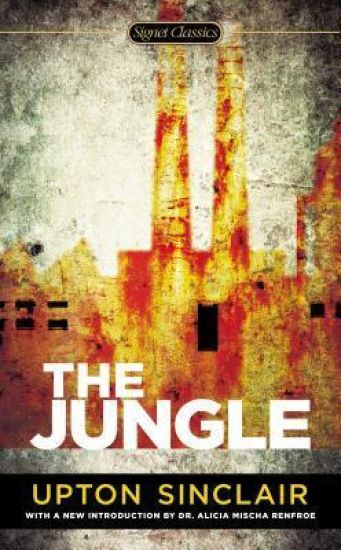
Upton Sinclair's classic revelatory novel about turn-of-the-century business and immigrant labor practices. Jurgis Rudkus, a young Lithuanian immigrant in search of a better life, faces instead an epic struggle for survival. His story of factory life in Chicago in the early twentieth century is a saga of barbarous working conditions, crushing poverty, crime, disease, and despair. Upton Sinclair's vivid depiction of the horrors of Chicago's stockyards and slaughterhouses aroused such public indignation that a government investigation was called, eventually resulting in the passage of pure food laws. More than a hundred years later, The Jungle continues to pack the same emotional power it did when it was first published. Includes an Introduction by Alicia Mischa Renfroeand an Afterword by Dr. Barry Sears

Upton Beall Sinclair, Jr. (September 20, 1878 - November 25, 1968), was an American author who wrote close to one hundred books in many genres. He achieved popularity in the first half of the twentieth century, acquiring particular fame for his classic muckraking novel, The Jungle (1906). It exposed conditions in the U.S. meat packing industry, causing a public uproar that contributed in part to the passage a few months later of the 1906 Pure Food and Drug Act and the Meat Inspection Act. In 1919, he published The Brass Check, a muckraking expos of American journalism that publicized the issue of yellow journalism and the limitations of the "free press" in the United States. Four years after the initial publication of The Brass Check, the first code of ethics for journalists was created Time magazine called him "a man with every gift except humor and silence."In 1943, he won the Pulitzer Prize for Fiction.