Kirjojen hintavertailu. Mukana 12 200 367 kirjaa ja 12 kauppaa.
Kirjailija
Upton Sinclair
Kirjat ja teokset yhdessä paikassa: 575 kirjaa, julkaisuja vuosilta 1905-2026, suosituimpien joukossa Sylvia. Vertaile teosten hintoja ja tarkista saatavuus suomalaisista kirjakaupoista.
"""I've been married three times, so I've had lots of supervision." -Sylvia's Marriage, Upton Sinclair In Sylvia's Marriage by Upton Sinclair (1914), the author uses the plot of his novel as a platform for his strong feelings about marriage. As Sinclair's protagonist, Sylvia's marital hardships provide the plot for Sinclair's story . The book is organized around Sylvia's three roles-as a mother, wife, and rebel. Through her story, Sinclair illustrates the dangers that society adds to a marriage of unsound men with unsuspecting wives.
". . . the best novel Mr. Sinclair has yet written-so much the best that it stands in a class by itself." -The New York Times (May 25, 1913) Although published under Upton Sinclair's name, Sylvia (1913) was written as a collaboration between Upton and Mary Sinclair and is based on Mary's childhood experiences. It is written as the narration of a young working woman who befriends a southern belle and is exposed to the luxury of the aristocracy the latter belonged to before falling in love with, and marrying, a boy from a less privileged background.
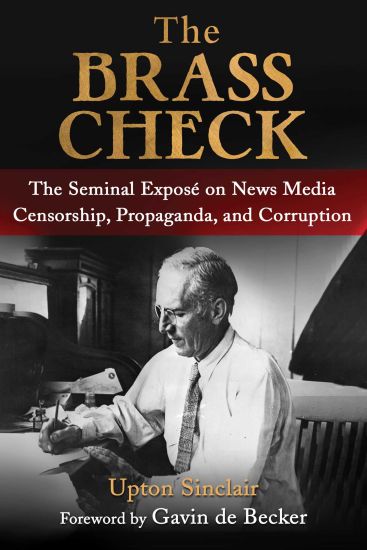
Upton Sinclair's scathing exposé of early 1900s mainstream media and journalism Written by acclaimed muck-racking journalist and author of The Jungle—which documented the inhumane conditions in meatpacking plants in the early twentieth century—The Brass Check is Upton Sinclair's piercing critique of mainstream media's biases in its reporting; how it was not interested in combatting misinformation, but was more heavily influenced by its wealthy owners and their own sociopolitical interests and agendas. Sinclair investigates and conjectures about the power of capitalism and money and its influence over mass media, and cites several contemporary cases, including media's involvement and perpetuation of the Red Scare, the Ludlow Massacre in 1914, the Paint Creek-Cabin Creek strike of 1912, among other examples. It is one of six books within the Dead Hand series that Sinclair wrote to criticise various institutions and industries that cultivate and influence the fabric of American society. Within the book, Sinclair proposes a handful solutions to hold journalists and media accountable for censorship, sensationalism, and for the accuracy of the content they filter, spin, position, and distribute into the world. Sinclair himself called it "the most important and most dangerous book I have ever written" and originally published it without registering copyright to the text to increase circulation and subsequently the book's reach to the general public. As a result, the first code of ethics for journalists was established in 1923, just a few years after the book was released. In 2022, it is more relevant than ever.