Kirjojen hintavertailu. Mukana 12 152 606 kirjaa ja 12 kauppaa.

Kirjailija

William Cronon

Kirjat ja teokset yhdessä paikassa: 92 kirjaa, julkaisuja vuosilta 1992-2017, suosituimpien joukossa Car Country. Vertaile teosten hintoja ja tarkista saatavuus suomalaisista kirjakaupoista.

92 kirjaa

Kirjojen julkaisuhaarukka 1992-2017.

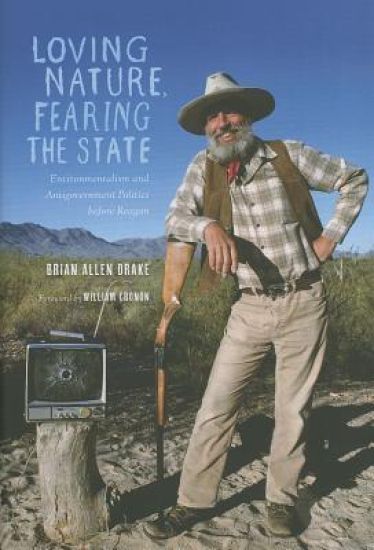
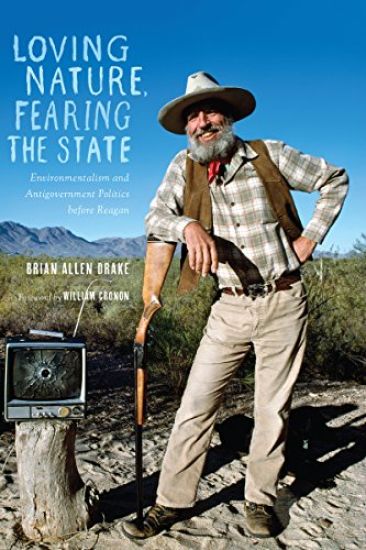
Loving Nature, Fearing the State

Loving Nature, Fearing the State

Brian Allen Drake; William Cronon

University of Washington Press
2015
pokkari
A "conservative environmental tradition" in America may sound like a contradiction in terms, but as Brian Allen Drake shows in Loving Nature, Fearing the State, right-leaning politicians and activists have shaped American environmental consciousness since the environmental movement's beginnings. In this wide-ranging history, Drake explores the tensions inherent in balancing an ideology dedicated to limiting the power of government with a commitment to protecting treasured landscapes and ecological health.Drake argues that "antistatist" beliefs--an individualist ethos and a mistrust of government--have colored the American passion for wilderness but also complicated environmental protection efforts. While most of the successes of the environmental movement have been enacted through the federal government, conservative and libertarian critiques of big-government environmentalism have increasingly resisted the idea that strengthening state power is the only way to protect the environment.Loving Nature, Fearing the State traces the influence of conservative environmental thought through the stories of important actors in postwar environmental movements. The book follows small-government pioneer Barry Goldwater as he tries to establish federally protected wilderness lands in the Arizona desert and shows how Goldwater's intellectual and ideological struggles with this effort provide a framework for understanding the dilemmas of an antistatist environmentalism. It links antigovernment activism with environmental public health concerns by analyzing opposition to government fluoridation campaigns and investigates environmentalism from a libertarian economic perspective through the work of free-market environmentalists. Drake also sees in the work of Edward Abbey an argument that reverence for nature can form the basis for resistance to state power. Each chapter highlights debates and tensions that are important to understanding environmental history and the challenges that face environmental protection efforts today.

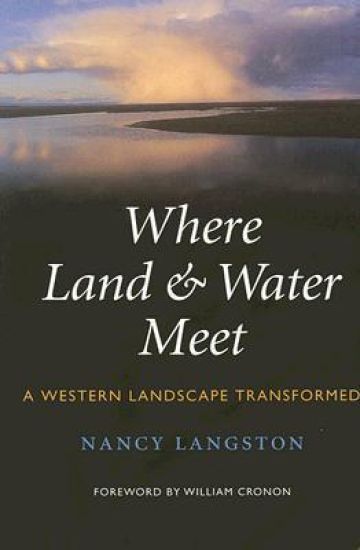
Where Land and Water Meet

Where Land and Water Meet

Nancy Langston; William Cronon

University of Washington Press
2015
sidottu
Water and land interrelate in surprising and ambiguous ways, and riparian zones, where land and water meet, have effects far outside their boundaries. Using the Malheur Basin in southeastern Oregon as a case study, this intriguing and nuanced book explores the ways people have envisioned boundaries between water and land, the ways they have altered these places, and the often unintended results.The Malheur Basin, once home to the largest cattle empires in the world, experienced unintended widespread environmental degradation in the late nineteenth and early twentieth centuries. After establishment in 1908 of Malheur National Wildlife Refuge as a protected breeding ground for migratory birds, and its expansion in the 1930s and 1940s, the area experienced equally extreme intended modifications aimed at restoring riparian habitat. Refuge managers ditched wetlands, channelized rivers, applied Agent Orange and rotenone to waterways, killed beaver, and cut down willows. Where Land and Water Meet examines the reasoning behind and effects of these interventions, gleaning lessons from their successes and failures.Although remote and specific, the Malheur Basin has myriad ecological and political connections to much larger places. This detailed look at one tangled history of riparian restoration shows how—through appreciation of the complexity of environmental and social influences on land use, and through effective handling of conflict—people can learn to practice a style of pragmatic adaptive resource management that avoids rigid adherence to single agendas and fosters improved relationships with the land.
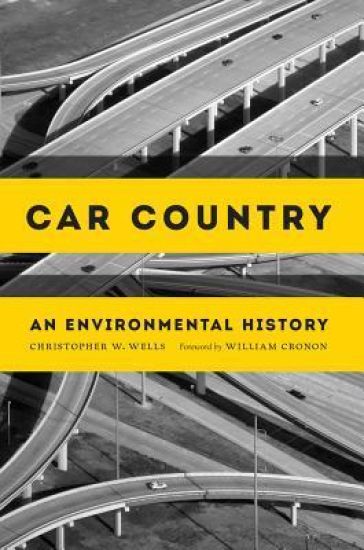
Car Country

Car Country

Christopher W. Wells; William Cronon

University of Washington Press
2014
pokkari
For most people in the United States, going almost anywhere begins with reaching for the car keys. This is true, Christopher Wells argues, because the United States is Car Country—a nation dominated by landscapes that are difficult, inconvenient, and often unsafe to navigate by those who are not sitting behind the wheel of a car.The prevalence of car-dependent landscapes seems perfectly natural to us today, but it is, in fact, a relatively new historical development. In Car Country, Wells rejects the idea that the nation's automotive status quo can be explained as a simple byproduct of an ardent love affair with the automobile. Instead, he takes readers on a tour of the evolving American landscape, charting the ways that transportation policies and land-use practices have combined to reshape nearly every element of the built environment around the easy movement of automobiles. Wells untangles the complicated relationships between automobiles and the environment, allowing readers to see the everyday world in a completely new way. The result is a history that is essential for understanding American transportation and land-use issues today.Watch the book trailer: http://www.youtube.com/watch?v=48LTKOxxrXQ
Loving Nature, Fearing the State

Loving Nature, Fearing the State

Brian Allen Drake; William Cronon

University of Washington Press
2013
sidottu
A "conservative environmental tradition" in America may sound like a contradiction in terms, but as Brian Allen Drake shows in Loving Nature, Fearing the State, right-leaning politicians and activists have shaped American environmental consciousness since the environmental movement's beginnings. In this wide-ranging history, Drake explores the tensions inherent in balancing an ideology dedicated to limiting the power of government with a commitment to protecting treasured landscapes and ecological health.Drake argues that "antistatist" beliefs--an individualist ethos and a mistrust of government--have colored the American passion for wilderness but also complicated environmental protection efforts. While most of the successes of the environmental movement have been enacted through the federal government, conservative and libertarian critiques of big-government environmentalism have increasingly resisted the idea that strengthening state power is the only way to protect the environment.Loving Nature, Fearing the State traces the influence of conservative environmental thought through the stories of important actors in postwar environmental movements. The book follows small-government pioneer Barry Goldwater as he tries to establish federally protected wilderness lands in the Arizona desert and shows how Goldwater's intellectual and ideological struggles with this effort provide a framework for understanding the dilemmas of an antistatist environmentalism. It links antigovernment activism with environmental public health concerns by analyzing opposition to government fluoridation campaigns and investigates environmentalism from a libertarian economic perspective through the work of free-market environmentalists. Drake also sees in the work of Edward Abbey an argument that reverence for nature can form the basis for resistance to state power. Each chapter highlights debates and tensions that are important to understanding environmental history and the challenges that face environmental protection efforts today.
Toxic Archipelago

Toxic Archipelago

Brett L. Walker; William Cronon

University of Washington Press
2011
pokkari
Every person on the planet is entangled in a web of ecological relationships that link farms and factories with human consumers. Our lives depend on these relationships -- and are imperiled by them as well. Nowhere is this truer than on the Japanese archipelago.During the nineteenth century, Japan saw the rise of Homo sapiens industrialis, a new breed of human transformed by an engineered, industrialized, and poisonous environment. Toxins moved freely from mines, factory sites, and rice paddies into human bodies.Toxic Archipelago explores how toxic pollution works its way into porous human bodies and brings unimaginable pain to some of them. Brett Walker examines startling case studies of industrial toxins that know no boundaries: deaths from insecticide contaminations; poisonings from copper, zinc, and lead mining; congenital deformities from methylmercury factory effluents; and lung diseases from sulfur dioxide and asbestos.This powerful, probing book demonstrates how the Japanese archipelago has become industrialized over the last two hundred years -- and how people and the environment have suffered as a consequence.
Drawing Lines in the Forest

Drawing Lines in the Forest

Kevin R. Marsh; William Cronon

University of Washington Press
2010
pokkari
Drawing boundaries around wilderness areas often serves a double purpose: protection of the land within the boundary and release of the land outside the boundary to resource extraction and other development. In Drawing Lines in the Forest, Kevin R. Marsh discusses the roles played by various groups—the Forest Service, the timber industry, recreationists, and environmentalists—in arriving at these boundaries. He shows that pragmatic, rather than ideological, goals were often paramount, with all sides benefiting.After World War II, representatives of both logging and recreation use sought to draw boundaries that would serve to guarantee access to specific areas of public lands. The logging industry wanted to secure a guaranteed supply of timber, as an era of stewardship of the nation's public forests gave way to an emphasis on rapid extraction of timber resources. This spawned a grassroots preservationist movement that ultimately challenged the managerial power of the Forest Service. The Wilderness Act of 1964 provided an opportunity for groups on all sides to participate openly and effectively in the political process of defining wilderness boundaries.The often contentious debates over the creation of wilderness areas in the Cascade Mountains in Oregon and Washington represent the most significant stages in the national history of wilderness conservation since World War II: Three Sisters, North Cascades and Glacier Peak, Mount Jefferson, Alpine Lakes, French Pete, and the state-wide wilderness acts of 1984.
Drawing Lines in the Forest

Drawing Lines in the Forest

Kevin R. Marsh; William Cronon

University of Washington Press
2007
sidottu
Drawing boundaries around wilderness areas often serves a double purpose: protection of the land within the boundary and release of the land outside the boundary to resource extraction and other development. In Drawing Lines in the Forest, Kevin R. Marsh discusses the roles played by various groups—the Forest Service, the timber industry, recreationists, and environmentalists—in arriving at these boundaries. He shows that pragmatic, rather than ideological, goals were often paramount, with all sides benefiting.After World War II, representatives of both logging and recreation use sought to draw boundaries that would serve to guarantee access to specific areas of public lands. The logging industry wanted to secure a guaranteed supply of timber, as an era of stewardship of the nation's public forests gave way to an emphasis on rapid extraction of timber resources. This spawned a grassroots preservationist movement that ultimately challenged the managerial power of the Forest Service. The Wilderness Act of 1964 provided an opportunity for groups on all sides to participate openly and effectively in the political process of defining wilderness boundaries.The often contentious debates over the creation of wilderness areas in the Cascade Mountains in Oregon and Washington represent the most significant stages in the national history of wilderness conservation since World War II: Three Sisters, North Cascades and Glacier Peak, Mount Jefferson, Alpine Lakes, French Pete, and the state-wide wilderness acts of 1984.
Where Land and Water Meet

Where Land and Water Meet

Nancy Langston; William Cronon

University of Washington Press
2006
pokkari
Water and land interrelate in surprising and ambiguous ways, and riparian zones, where land and water meet, have effects far outside their boundaries. Using the Malheur Basin in southeastern Oregon as a case study, this intriguing and nuanced book explores the ways people have envisioned boundaries between water and land, the ways they have altered these places, and the often unintended results.The Malheur Basin, once home to the largest cattle empires in the world, experienced unintended widespread environmental degradation in the late nineteenth and early twentieth centuries. After establishment in 1908 of Malheur National Wildlife Refuge as a protected breeding ground for migratory birds, and its expansion in the 1930s and 1940s, the area experienced equally extreme intended modifications aimed at restoring riparian habitat. Refuge managers ditched wetlands, channelized rivers, applied Agent Orange and rotenone to waterways, killed beaver, and cut down willows. Where Land and Water Meet examines the reasoning behind and effects of these interventions, gleaning lessons from their successes and failures.Although remote and specific, the Malheur Basin has myriad ecological and political connections to much larger places. This detailed look at one tangled history of riparian restoration shows how—through appreciation of the complexity of environmental and social influences on land use, and through effective handling of conflict—people can learn to practice a style of pragmatic adaptive resource management that avoids rigid adherence to single agendas and fosters improved relationships with the land.
The Lost Wolves of Japan

The Lost Wolves of Japan

Brett L. Walker; William Cronon

University of Washington Press
2005
sidottu
Many Japanese once revered the wolf as Oguchi no Magami, or Large-Mouthed Pure God, but as Japan began its modern transformation wolves lost their otherworldly status and became noxious animals that needed to be killed. By 1905 they had disappeared from the country. In this spirited and absorbing narrative, Brett Walker takes a deep look at the scientific, cultural, and environmental dimensions of wolf extinction in Japan and tracks changing attitudes toward nature through Japan's long history.Grain farmers once worshiped wolves at shrines and left food offerings near their dens, beseeching the elusive canine to protect their crops from the sharp hooves and voracious appetites of wild boars and deer. Talismans and charms adorned with images of wolves protected against fire, disease, and other calamities and brought fertility to agrarian communities and to couples hoping to have children. The Ainu people believed that they were born from the union of a wolflike creature and a goddess.In the eighteenth century, wolves were seen as rabid man-killers in many parts of Japan. Highly ritualized wolf hunts were instigated to cleanse the landscape of what many considered as demons. By the nineteenth century, however, the destruction of wolves had become decidedly unceremonious, as seen on the island of Hokkaido. Through poisoning, hired hunters, and a bounty system, one of the archipelago's largest carnivores was systematically erased.The story of wolf extinction exposes the underside of Japan's modernization. Certain wolf scientists still camp out in Japan to listen for any trace of the elusive canines. The quiet they experience reminds us of the profound silence that awaits all humanity when, as the Japanese priest Kenko taught almost seven centuries ago, we "look on fellow sentient creatures without feeling compassion."
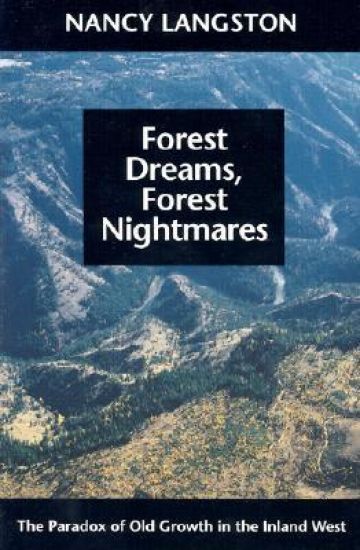
Forest Dreams, Forest Nightmares

Forest Dreams, Forest Nightmares

Nancy Langston; William Cronon

University of Washington Press
1996
pokkari
Across the inland West, forests that once seemed like paradise have turned into an ecological nightmare. Fires, insect epidemics, and disease now threaten millions of acres of once-bountiful forests. Yet no one can agree what went wrong. Was it too much management—or not enough—that forced the forests of the inland West to the verge of collapse? Is the solution more logging, or no logging at all? In this gripping work of scientific and historical detection, Nancy Langston unravels the disturbing history of what went wrong with the western forests, despite the best intentions of those involved.Focusing on the Blue Mountains of northeastern Oregon and southeastern Washington, she explores how the complex landscapes that so impressed settlers in the nineteenth century became an ecological disaster in the late twentieth. Federal foresters, intent on using their scientific training to stop exploitation and waste, suppressed light fires in the ponderosa pinelands. Hoping to save the forests, they could not foresee that their policies would instead destroy what they loved. When light fires were kept out, a series of ecological changes began. Firs grew thickly in forests once dominated by ponderosa pines, and when droughts hit, those firs succumbed to insects, diseases, and eventually catastrophic fires.Nancy Langston combines remarkable skills as both scientist and writer of history to tell this story. Her ability to understand and bring to life the complex biological processes of the forest is matched by her grasp of the human forces at work—from Indians, white settlers, missionaries, fur trappers, cattle ranchers, sheep herders, and railroad builders to timber industry and federal forestry managers.The book will be of interest to a wide audience of environmentalists, historians, ecologists, foresters, ranchers, and loggers—and all people who want to understand the changing lands of the West.
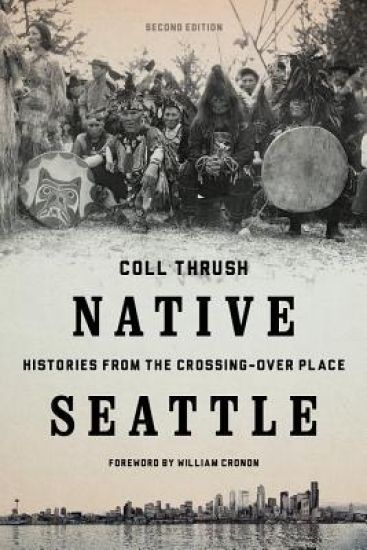
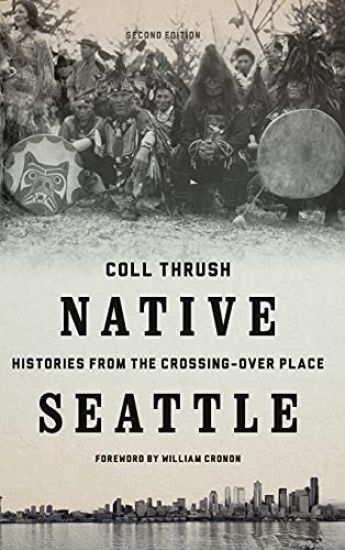
Native Seattle

Native Seattle

Coll Thrush; William Cronon

University of Washington Press
2017
pokkari
Winner of the 2008 Washington State Book Award in History/BiographyThis updated edition of Native Seattle brings the indigenous story to the present day and puts the movement of recognizing Seattle's Native past into a broader context. Native Seattle focuses on the experiences of local indigenous communities on whose land Seattle grew, accounts of Native migrants to the city and the development of a multi-tribal urban community, as well as the role Native Americans have played in the narrative of Seattle.
Native Seattle

Native Seattle

Coll Thrush; William Cronon

University of Washington Press
2017
sidottu
Winner of the 2008 Washington State Book Award in History/BiographyThis updated edition of Native Seattle brings the indigenous story to the present day and puts the movement of recognizing Seattle's Native past into a broader context. Native Seattle focuses on the experiences of local indigenous communities on whose land Seattle grew, accounts of Native migrants to the city and the development of a multi-tribal urban community, as well as the role Native Americans have played in the narrative of Seattle.
Whales and Nations

Whales and Nations

Kurkpatrick Dorsey; William Cronon

University of Washington Press
2016
pokkari
Before commercial whaling was outlawed in the 1980s, diplomats, scientists, bureaucrats, environmentalists, and sometimes even whalers themselves had attempted to create an international regulatory framework that would allow for a sustainable whaling industry. In Whales and Nations, Kurkpatrick Dorsey tells the story of the international negotiation, scientific research, and industrial development behind these efforts —and their ultimate failure.Whales and Nations begins in the early twentieth century, when new technology revived the fading whaling industry and made whale hunting possible on an unprecedented scale. By the 1920s, declining whale populations prompted efforts to develop "rational"—what today would be called sustainable—whaling practices. But even though almost everyone involved with commercial whaling knew that the industry was on an unsustainable path, Dorsey argues, powerful economic, political, and scientific forces made failure nearly inevitable.Based on a deep engagement with diplomatic history, Whales and Nations provides a unique perspective on the challenges facing international conservation projects. This history has profound implications for today's pressing questions of global environmental cooperation and sustainability.Watch the trailer: http://www.youtube.com/watch?v=3QsLlM5KTx0
The Wilderness Writings of Howard Zahniser

The Wilderness Writings of Howard Zahniser

William Cronon

University of Washington Press
2016
pokkari
Howard Zahniser (1906–1964), executive secretary of The Wilderness Society and editor of The Living Wilderness from 1945 to 1964, is arguably the person most responsible for drafting and promoting the Wilderness Act in 1964. The act, which created the National Wilderness Preservation System, was the culmination of Zahniser's years of tenacious lobbying and his work with conservationists across the nation. In 1964, fifty-four wilderness areas in thirteen states were part of the system; today the number has grown to 757 areas, protecting more than a hundred million acres in forty-four states and Puerto Rico.Zahniser's passion for wild places and his arguments for their preservation were communicated through radio addresses, magazine articles, speeches, and congressional testimony. An eloquent and often poetic writer, he seized every opportunity to make the case for the value of wilderness to people, communities, and the nation.Despite his unquestioned importance and the power of his prose, the best of Zahniser's wilderness writings have never before been gathered in a single volume. This indispensable collection makes available in one place essays and other writings that played a vital role in persuading Congress and the American people that wilderness in the United States deserved permanent protection.
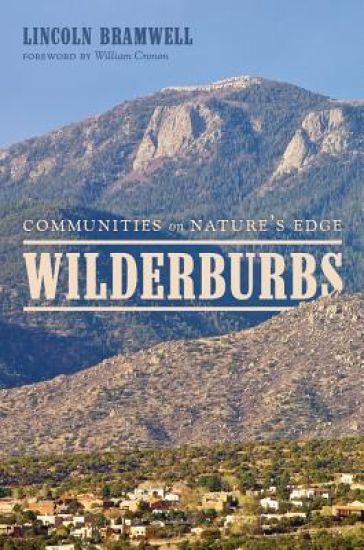
Wilderburbs

Wilderburbs

Lincoln Bramwell; William Cronon

University of Washington Press
2016
pokkari
Since the 1950s, the housing developments in the West that historian Lincoln Bramwell calls "wilderburbs" have offered residents both the pleasures of living in nature and the creature comforts of the suburbs. Remote from cities but still within commuting distance, nestled next to lakes and rivers or in forests and deserts, and often featuring spectacular views of public lands, wilderburbs celebrate the natural beauty of the American West and pose a vital threat to it. Wilderburbs tells the story of how roads and houses and water development have transformed the rural landscape in the West. Bramwell introduces readers to developers, homeowners, and government regulators, all of whom have faced unexpected environmental problems in designing and building wilderburb communities, including unpredictable water supplies, threats from wildfires, and encounters with wildlife. By looking at wilderburbs in the West, especially those in Utah, Colorado, and New Mexico, Bramwell uncovers the profound environmental consequences of Americans' desire to live in the wilderness.
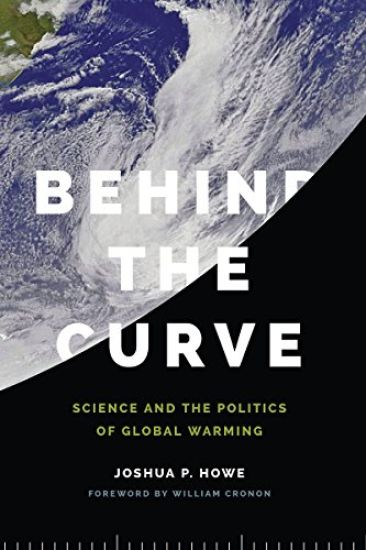
Behind the Curve

Behind the Curve

Joshua P. Howe; William Cronon

University of Washington Press
2016
pokkari
In 1958, Charles David Keeling began measuring the concentration of carbon dioxide in the earth's atmosphere at the Mauna Loa Observatory in Hawaii. His project kicked off a half century of research that has expanded our knowledge of climate change. Despite more than fifty years of research, however, our global society has yet to find real solutions to the problem of global warming. Why?In Behind the Curve, Joshua Howe attempts to answer this question. He explores the history of global warming from its roots as a scientific curiosity to its place at the center of international environmental politics. The book follows the story of rising CO2—illustrated by the now famous Keeling Curve—through a number of historical contexts, highlighting the relationships among scientists, environmentalists, and politicians as those relationships changed over time.The nature of the problem itself, Howe explains, has privileged scientists as the primary spokespeople for the global climate. But while the "science first" forms of advocacy they developed to fight global warming produced more and better science, the primacy of science in global warming politics has failed to produce meaningful results. In fact, an often exclusive focus on science has left advocates for change vulnerable to political opposition and has limited much of the discussion to debates about the science itself.As a result, while we know much more about global warming than we did fifty years ago, CO2 continues to rise. In 1958, Keeling first measured CO2 at around 315 parts per million; by 2013, global CO2 had soared to 400 ppm. The problem is not getting better - it's getting worse. Behind the Curve offers a critical and levelheaded look at how we got here.
Conservation in the Progressive Era

Conservation in the Progressive Era

David Stradling; William Cronon

University of Washington Press
2016
sidottu
Conservation was the first nationwide political movement in American history to grapple with environmental problems like waste, pollution, resource exhaustion, and sustainability. At its height, the conservation movement was a critical aspect of the broader reforms undertaken in the Progressive Era (1890-1910), as the rapidly industrializing nation struggled to protect human health, natural beauty, and "national efficiency." This highly effective Progressive Era movement was distinct from earlier conservation efforts and later environmentalist reforms.Conservation in the Progressive Era places conservation in historical context, using the words of participants in and opponents to the movement. Together, the documents collected here reveal the various and sometimes conflicting uses of the term "conservation" and the contested nature of the reforms it described.This collection includes classic texts by such well-known figures as Theodore Roosevelt, Gifford Pinchot, and John Muir, as well as texts from lesser-known but equally important voices that are often overlooked in environmental studies: those of rural communities, women, and the working class. These lively selections provoke unexpected questions and ideas about many of the significant environmental issues facing us today.
DDT, Silent Spring, and the Rise of Environmentalism

DDT, Silent Spring, and the Rise of Environmentalism

Thomas Dunlap; William Cronon

University of Washington Press
2015
sidottu
No single event played a greater role in the birth of modern environmentalism than the publication of Rachel Carson's Silent Spring and its assault on insecticides. The documents collected by Thomas Dunlap trace shifting attitudes toward DDT and pesticides in general through a variety of sources: excerpts from scientific studies and government reports, advertisements from industry journals, articles from popular magazines, and the famous "Fable for Tomorrow" from Silent Spring. Beginning with attitudes toward nature at the turn of the twentieth century, the book moves through the use and early regulation of pesticides; the introduction and early success of DDT; the discovery of its environmental effects; and the uproar over Silent Spring. It ends with recent debates about DDT as a potential solution to malaria in Africa.
A Symbol of Wilderness

A Symbol of Wilderness

Mark W. T. Harvey; William Cronon

University of Washington Press
2015
sidottu
Harvey details the first major clash between conservationists and developers after World War II, the successful fight to prevent the building of Echo Park Dam. The dam on the Green River was intended to create a recreational lake in northwest Colorado and generate hydroelectric power, but would have flooded picturesque Echo Park Valley and threatened Dinosaur National Monument, straddling the Utah-Colorado border near Wyoming.
The Environmental Moment

The Environmental Moment

William Cronon

University of Washington Press
2015
sidottu
The Environmental Moment is a collection of documents that reveal the significance of the years 1968-1972 to the environmental movement in the United States. With material ranging from short pieces from the Whole Earth Catalog and articles from the Village Voice to lectures, posters, and government documents, the collection describes the period through the perspective of a diversity of participants, including activists, politicians, scientists, and average citizens. Included are the words of Rachel Carson, but also the National Review, Howard Zahniser on wilderness, Nathan Hare on the Black underclass. The chronological arrangement reveals the coincidence of a multitude of issues that rushed into public consciousness during a critical time in American history.